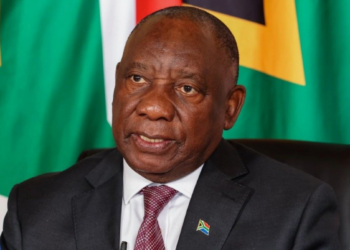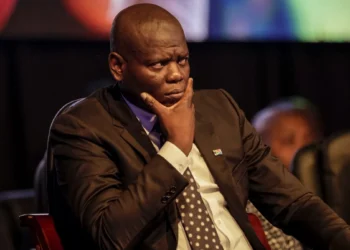







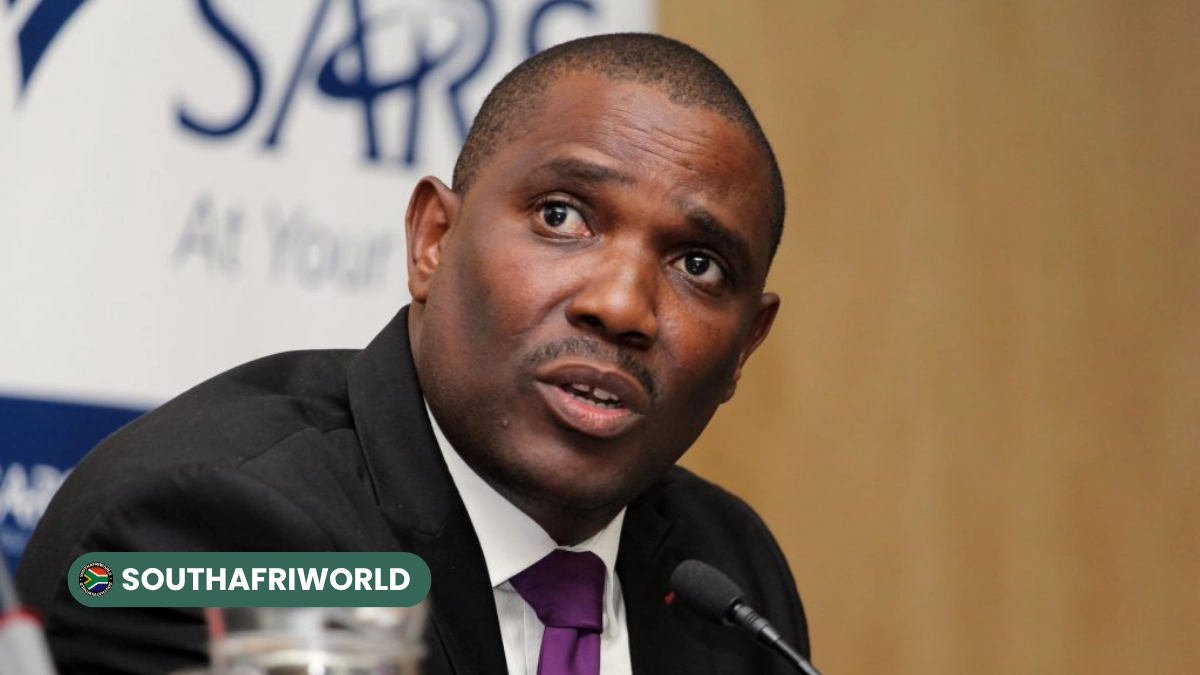
President Cyril Ramaphosa has appointed Dr Ngobani Johnstone Makhubu as the next Commissioner of the South African Revenue Service, giving him a five-year term from 1 May 2026. He will replace Edward Kieswetter, whose current contract ends on 30 April, in a handover that comes just as SARS has reported record net revenue collection and as the state leans heavily on stronger administration rather than broad new tax increases to support the fiscus.
The appointment is significant because SARS sits at the centre of South Africa’s fiscal system. It collects the revenue that funds infrastructure, social services and day-to-day government operations. A change at the top of SARS is therefore not just a staffing story. It is a state-capacity story, a tax-compliance story and, at a time of tight public finances, a story about whether the revenue authority can sustain recent gains in collection, enforcement and voluntary compliance.
What we know so far
The Presidency said on Thursday, 2 April 2026, that Ramaphosa appointed Makhubu under section 6 of the South African Revenue Service Act following a unanimous recommendation from a selection panel convened by Finance Minister Enoch Godongwana. The statement says Makhubu has served as Deputy Commissioner: Taxpayer Engagement & Operations since 2023 and succeeds Kieswetter at the end of the outgoing commissioner’s term on 30 April.
The official record also shows this is being framed as a continuity appointment rather than a sharp break from the current SARS direction. The Presidency said Makhubu has worked on the formulation of SARS’s strategic direction since 2020 and has helped implement Vision 2024 alongside Kieswetter. It added that the leadership change shows how succession planning can contribute to state capability. Separately, SARS has already scheduled an introductory press conference for the commissioner-designate on 4 April 2026 at its Woodmead office, an indication that the transition is moving quickly into its public handover phase.
That matters editorially because the stronger and more accurate framing is not simply that South Africa has “a new SARS boss”. The primary-source record supports a narrower but more meaningful conclusion: Ramaphosa has chosen an internal successor from SARS’s current top leadership, signalling continuity in the institution’s compliance, operations and revenue-collection strategy. There is, at this stage, no official policy speech from Makhubu in the source material reviewed that sets out a new doctrine or major strategic break.
Why it matters
SARS’s leadership matters because collection performance has become even more important in a weak-growth environment. SARS said this week that net revenue collection reached R2.0103 trillion as of 31 March 2026, up 8.4 percent from the previous fiscal year. National Treasury’s 2026 Budget Review also said government had withdrawn the R20 billion tax increase previously pencilled in for the 2026 Budget, while revising gross tax revenue for 2025/26 upward by R21.3 billion. In practical terms, that means stronger administration and collection are carrying more weight in the fiscal strategy.
A new commissioner therefore arrives at a consequential moment. Treasury said the tax-to-GDP ratio is expected to rise to 25.9 percent in 2025/26, while SARS highlighted compliance initiatives, improved administrative efficiencies and revenue maximisation as reasons for the stronger outcome. If the institution can preserve that momentum, the state gets more room to fund obligations without immediately leaning on broader tax hikes. If it falters, the pressure on future budgets grows.
There is also an institutional reason the appointment matters. SARS is not only a tax collector. It is a major enforcement, customs and trade-facilitation body whose credibility affects business confidence, taxpayer behaviour and the state’s wider governance standing. The Presidency explicitly linked Kieswetter’s tenure to fiscal stability, social delivery, trade facilitation and the enablement of domestic and foreign investment. By presenting Makhubu as a seasoned executive with more than 17 years of senior leadership experience across tax administration, finance, commercial and operations roles, the official message is that SARS should keep moving on the same broad track rather than start over.
Key details and figures
Several details from the official material stand out. Makhubu’s term starts on 1 May 2026 and runs for five years. He has been SARS Deputy Commissioner: Taxpayer Engagement & Operations since 2023, and the Presidency says he has been involved in shaping the organisation’s strategic direction since 2020. It also says implementation of Vision 2024 delivered revenue collections with a compounded annual growth rate of 7.6 percent while voluntary compliance rose by 3.4 percentage points.
The broader institutional backdrop is equally important. SARS reported net collections of R2.0103 trillion for the year ended 31 March 2026, with the result described as R24.7 billion higher than estimated a year earlier. Treasury’s Budget Review says gross tax revenue for 2025/26 was revised up to R2.006947 trillion and that government withdrew the previously signalled 2026 tax increase. Taken together, those figures help explain why continuity at SARS is being treated as a matter of public interest rather than routine administration.
Timeline
On 1 April 2026, SARS announced its preliminary revenue collection outcome for 2025/26. On 2 April 2026, Ramaphosa announced Makhubu’s appointment as commissioner. SARS then issued a media advisory for an introductory press conference on 4 April 2026, ahead of the formal leadership change on 1 May 2026 when Kieswetter’s contract ends and Makhubu’s term begins.
What happens next
The next hard date is 1 May, when Makhubu formally takes office. Before then, SARS says journalists will be briefed at an introductory press conference on 4 April. That event may provide the first clearer indication of his priorities in office, including whether he intends to deepen the current emphasis on debt collection, compliance, service delivery, digital administration and illicit-economy enforcement. Based on the official material now available, however, the immediate takeaway is continuity rather than disruption.
For readers, the practical importance is straightforward. A new SARS commissioner does not itself change tax rates or filing rules overnight. What it does change is who will lead the institution responsible for collecting revenue, running major compliance systems, managing enforcement risk and supporting the state’s fiscal position in the years ahead. That is why this appointment is more than a boardroom reshuffle. It is a leadership change at one of the country’s most consequential public institutions.