







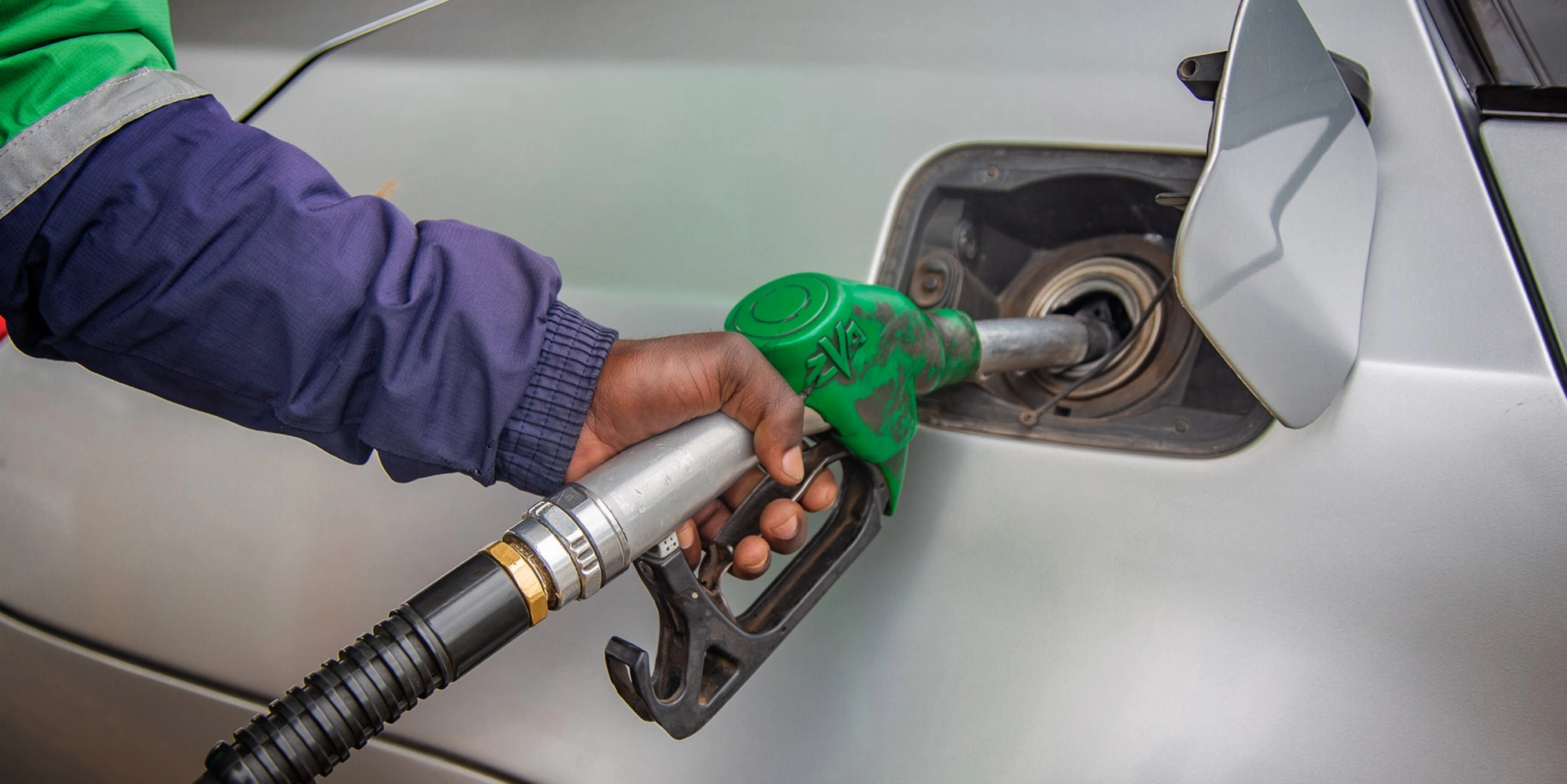
South African motorists are facing the risk of a sharp fuel price increase in April after early data from the Central Energy Fund, or CEF, moved deeply into under-recovery territory just days into the new pricing cycle. The pressure is coming from two directions at once: a jump in international fuel prices linked to Middle East tensions and a weaker rand, while higher fuel-related levies announced in the 2026 Budget are also due to take effect from 1 April.
That combination matters because South Africa’s fuel price is regulated and adjusted monthly based on international and local factors. The Department of Mineral and Petroleum Resources, or DMRE, already confirmed an increase for March 2026, but the latest CEF numbers suggest April could be significantly more painful if current trends hold through month-end.
Early April fuel data has turned sharply negative
CEF’s Daily Basic Fuel Price snapshot published on 5 March 2026 shows average under-recoveries from 27 February to 5 March of 228.366 cents per litre for Petrol 93, 241.216 cents for Petrol 95, 439.942 cents for diesel with 0.05% sulphur, and 449.837 cents for diesel with 0.005% sulphur. In practical terms, that means the current tracking points to possible increases of about R2.28 per litre for Petrol 93, R2.41 for Petrol 95, R4.39 for diesel 0.05%, and R4.50 for diesel 0.005% if those averages were to hold to the end of the month.
That makes diesel the biggest immediate concern. While petrol motorists would also feel a sharp jump, the deeper diesel under-recovery raises the risk of broader pressure across the economy because diesel costs feed into road freight, delivery fleets, agriculture and other transport-heavy sectors. The South African Reserve Bank is already watching the inflation risk from higher oil prices as it updates its adverse scenario ahead of its next rates decision.
These numbers are still projections, not the final April price
It is important to separate the official fuel price from the running projection. The official April adjustment has not yet been announced by the DMRE, and the final number will depend on how oil prices and the rand behave for the rest of March. Early-month CEF figures are widely watched because they show where the month is tracking, but they are not a final pump-price decision.
That distinction is especially important now because more dramatic claims are circulating online. As of 5 March, the official CEF average data points to increases in the roughly R2 to R4.50 per litre range depending on the fuel grade, not an authority-backed R8 across-the-board rise. More severe outcomes would require current market stress to intensify materially and persist for much longer.
Oil and the rand are driving the current shock
CEF’s own breakdown shows that the main reason for the latest under-recoveries is the movement in international product prices, with the exchange rate adding further pressure. For the 27 February to 5 March average, international product prices accounted for 211.734 cents of the Petrol 93 move and 428.077 cents of the diesel 0.005% move, while the exchange-rate component added 16.632 cents and 21.760 cents respectively.
The broader market backdrop helps explain why that deterioration has been so sudden. Reuters reported on 6 March that South African Reserve Bank Governor Lesetja Kganyago said Brent crude had risen above $94 a barrel and that the rand was trading at about 16.82 to the dollar, forcing the central bank to redraw its adverse risk scenario. Reuters also reported earlier in the week that the rand had weakened below 16.40 as higher oil prices and risk aversion hit sentiment.
For motorists, that means the April risk is not coming from one source alone. South Africa imports refined fuel price pressure through global oil and product markets, and the rand then amplifies or softens that move when the price is translated into local currency. When both variables move in the wrong direction together, the result can be felt very quickly at the pumps.
March was already higher before this latest move
The starting point for this story is that March already brought an official increase. The DMRE said fuel prices were adjusted from 4 March 2026 as follows: Petrol 93 up by 20 cents per litre, Petrol 95 up by 20 cents, diesel 0.05% up by 62 cents, diesel 0.005% up by 65 cents, and illuminating paraffin up by 44 cents. The slate levy remained unchanged at 0.00 cents per litre.
That means the market is moving from an already more expensive March base into a potentially much tougher April. As Southafriworld previously reported in its March fuel price update, diesel had already been leading the pressure before the latest geopolitical shock accelerated the trend.
New levies from 1 April add another layer of pressure
Treasury’s 2026 Budget adds a second problem for April pricing. National Treasury says that from 1 April the general fuel levy will rise to R4.10 per litre for petrol and R3.93 per litre for diesel, while the Road Accident Fund levy will increase by 7 cents per litre to R2.25. Treasury also says the carbon fuel levy will increase to 19 cents per litre for petrol and 23 cents for diesel from 1 April 2026.
Taken together, those tax changes amount to another 21 cents per litre on both petrol and diesel. Treasury’s tax guide separately highlights the 7 cent increase in the RAF levy and the 5 cent and 6 cent increases in the carbon tax on fuel for petrol and diesel respectively, reinforcing that the levy effect will land at the same time motorists are already dealing with higher market-based pricing pressure.
A large share of the pump price is already tax
One reason fuel hikes are so politically and economically sensitive in South Africa is that taxes already make up a large slice of the retail price. Treasury’s Budget Review shows total combined fuel taxes for 2026/27 at R6.58 per litre for 93-octane petrol and R6.45 per litre for diesel. On Treasury’s assumptions, that works out to 32.9% of the petrol pump price and 36.0% of the diesel pump price.
That does not mean taxes are the only reason prices are rising right now. The immediate shock in March is being driven primarily by global fuel-market movements and the exchange rate. But it does mean that the April price adjustment has less room for relief, because levy increases are already scheduled even if oil prices were to stabilise somewhat before month-end.
What motorists and businesses should watch now
The next few weeks will determine whether the projected shock softens or hardens. The three variables that matter most are the path of global oil and refined fuel prices, the rand-dollar exchange rate, and whether the current average under-recoveries narrow before the end of March. The official April adjustment will only be final once the DMRE publishes it.
For now, however, the direction of travel is clear. South Africa is not yet facing a confirmed record pump-price increase, but the current data already points to a substantial April rise, especially for diesel. With market pressure building and higher levies set to take effect on 1 April, motorists, transport operators and businesses that rely heavily on fuel are heading into the new month with little margin for comfort.