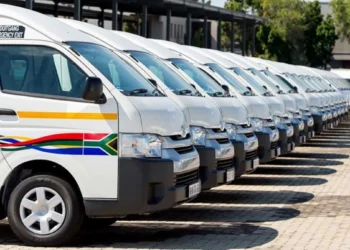








South Africa’s e-hailing drivers are heading into April with a new cost problem. Government’s 2026 Budget will raise fuel levies from 1 April, while official fuel-price data is also showing strong upward pressure for the next monthly adjustment.
That matters because fuel is one of the most immediate day-to-day costs in e-hailing. For drivers carrying passengers across long shifts, even small increases per litre can quickly reduce already thin margins. The next step is now clear enough to track: the levy increases are already built into Budget policy from 1 April, while the final April pump-price move will depend on how the rest of the month closes.
What we know so far
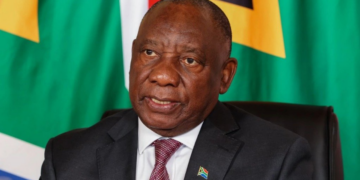
The first part of the blow is confirmed. In his 2026 Budget Speech, Finance Minister Enoch Godongwana said the general fuel levy will rise by 9 cents per litre for petrol and 8 cents per litre for diesel. He also said the Road Accident Fund levy will rise by 7 cents per litre, while the carbon fuel levy will increase by 5 cents per litre for petrol and 6 cents for diesel.
In practical terms, that means a combined increase of 21 cents per litre for both petrol and diesel from 1 April 2026. National Treasury’s Budget Review says the general fuel levy and RAF levy will increase from 1 April, and that the carbon fuel levy will also rise from that date under the Carbon Tax Act.
The second part of the pressure is less certain in final size, but still official. On 10 March, the Department of Mineral and Petroleum Resources said the continued rise in international crude oil prices is expected to result in higher fuel prices at the pump from April 2026. That means e-hailing drivers are not only facing a tax-and-levy increase, but also the risk of a broader market-driven rise in petrol and diesel prices.
The Central Energy Fund’s daily pricing snapshot shows why that warning matters. As of 20 March, average under-recoveries for the month to date stood at 541.285 cents per litre for petrol 95, 487.535 cents for petrol 93, 893.661 cents for diesel 0.05%, and 906.724 cents for diesel 0.005%. Those are not the final April price changes, but they do show strong upward pressure if conditions do not improve before month-end.
Why it matters
For e-hailing drivers, the danger is cumulative rather than dramatic in a single moment. A 21-cent-per-litre levy increase may not look large in isolation, but drivers who spend most of the day on the road buy fuel constantly. Unless fares rise enough to match the added cost, the increase comes directly out of driver earnings.
This comes at a difficult time for the wider transport market. South Africa’s fuel prices are adjusted monthly and are influenced by international product prices, shipping costs and the rand-dollar exchange rate. The DMRE’s March fuel statement makes that clear, and the department’s later March warning confirms that the international oil shock is already feeding into local pricing expectations.
For e-hailing specifically, the pressure is sharper than for occasional private motorists because fuel is tied directly to revenue generation. Drivers cannot simply cut back on usage without cutting back on trips. If they work peak hours, airport runs, long-distance requests or congested urban routes, rising fuel costs can quickly erode profitability. That is especially true where drivers are also carrying vehicle finance, rental, maintenance and platform-related costs. The fuel change therefore matters not only as a consumer story, but as an income story for thousands of people in the urban transport economy.
There is also a broader cost-of-living dimension. If driver earnings are squeezed and fares do not adjust fast enough, the pain sits with drivers. If platforms or fleets pass some of the cost on, passengers may face higher trip prices. Either way, the pressure lands inside a transport system already highly sensitive to fuel.
Key details and figures
The confirmed levy increases
The official tax changes from the 2026 Budget are:
- General fuel levy: up 9c/litre for petrol and 8c/litre for diesel from 1 April.
- Road Accident Fund levy: up 7c/litre for both petrol and diesel from 1 April.
- Carbon fuel levy: up to 19c/litre for petrol and 23c/litre for diesel from 1 April.
Taken together, these changes amount to a 21c/litre increase for both petrol and diesel before any separate monthly pump-price movement is added.
The market pressure still building
The official fuel-price indicators for 20 March show that pressure has not eased:
- Petrol 95 average under-recovery: 541.285 c/l
- Petrol 93 average under-recovery: 487.535 c/l
- Diesel 0.05% average under-recovery: 893.661 c/l
- Diesel 0.005% average under-recovery: 906.724 c/l
Those figures should not be treated as final April pump-price changes. They are month-to-date indicators published by the Central Energy Fund, and the final adjustment will depend on how international prices and the exchange rate move before the official cutoff.
What it means in rand terms
A simple calculation based only on the confirmed 21c/litre levy increase shows the effect on working drivers.
If a driver uses 50 litres over a working day and does that for 26 days in a month, the levy change alone adds about R273 a month. If fuel use is 80 litres over 26 working days, the added cost rises to about R436.80 a month. A driver using 60 litres a day over a 30-day cycle would face about R378 more a month from the levy increase alone. These are illustrative calculations based on the confirmed Budget changes and do not include any separate April fuel-price increase that may still follow.
What happens next
The next date that matters is 1 April. From then, the higher fuel levies will already be part of the cost of every litre bought in South Africa. That portion is effectively locked in through the Budget framework.
After that, attention will shift to the official April fuel-price announcement. The DMPR has already warned that higher pump prices are expected, but the exact size of the increase will depend on the final month-end recovery picture. If international crude prices stay elevated and the rand remains under pressure, e-hailing drivers could be hit by a double blow in the same window: a confirmed tax increase and a separate market-driven pump-price increase.
For South Africa’s e-hailing sector, that is the real bad news. There is no dramatic new ban or sector-specific law in this case. The problem is more basic and harder to avoid: higher fuel costs from April are set to make it more expensive to stay on the road. For drivers whose income depends on constant movement, that is a direct hit to the economics of the job.