










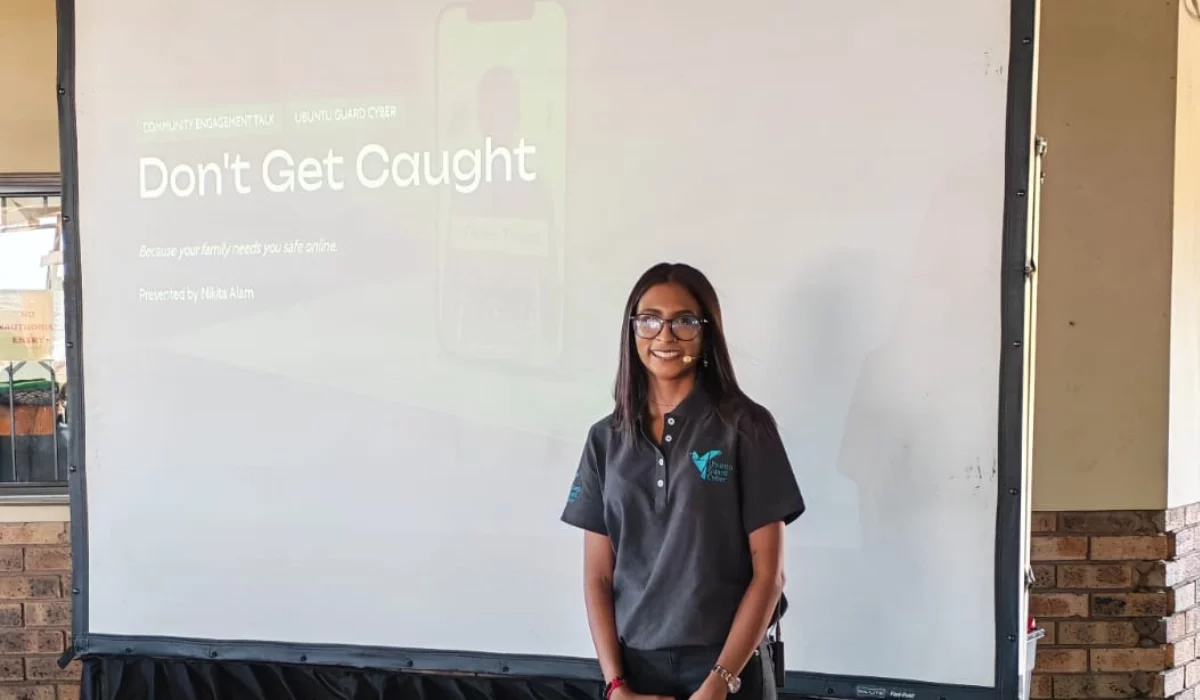
A senior citizens group in Durban recently received practical guidance on how to stay safer online during a community cybersecurity awareness talk presented by Ubuntu Guard Cyber.
The session, titled DON’T GET CAUGHT, was aimed at helping older adults better understand the growing online risks they face, while also giving them simple methods and tools they can use to protect themselves. The talk focused on common threats affecting ordinary South Africans, including WhatsApp scams, social media tricks, AI-related fraud, and online shopping data traps.
Ubuntu Guard Cyber said the initiative forms part of its wider mission to protect everyday communities from cybercrime after seeing how often ordinary people lose hard-earned money to online criminals. Rather than focusing only on large organisations, the group said its goal is to make digital safety more accessible to families, pensioners, and local communities.
Common scams explained in plain language
During the Durban session, attendees were shown how scammers often rely on panic, urgency, and trust to manipulate victims into acting too quickly.
Examples discussed included fake parcel delivery messages, suspicious family emergency requests, fraudulent investment groups, and fake profiles that appear believable at first glance. The presentation also warned that scams are becoming more convincing as criminals increasingly use newer technologies such as deepfake videos, cloned voices, and fake messages that appear to come from loved ones or trusted figures.
For many older adults, these types of scams can feel overwhelming because they often arrive through familiar platforms such as WhatsApp, Facebook, or SMS. The talk aimed to break those risks down in a practical and understandable way, showing that online safety begins with caution, awareness, and slowing down before responding.
The STOP Rule
A key part of the presentation was the introduction of the STOP Rule, a simple strategy designed to help people pause before reacting to suspicious messages or requests.
STOP stands for Stop, Think, Others, Protect.
The message behind the rule is straightforward: do not rush, do not panic, and do not click links or share information without first checking whether a message is genuine. Participants were encouraged to stop before acting, think about what is being asked, ask others when unsure, and protect their accounts and personal details.
This approach is especially important in scams that rely on emotional pressure. Criminals often want people to react immediately, before they have time to verify the situation or speak to someone they trust.
Families encouraged to use a secret code word
One of the practical recommendations shared during the session was for families to create a secret code word that can be used in emergencies.
This was presented as a useful safeguard against AI voice cloning and impersonation scams, where criminals may pretend to be a child, grandchild, or other relative in distress. A family code word can help confirm whether a call or voice note is really coming from a loved one.
The presentation also warned against oversharing personal information online. Details shared on social media or in public profiles can sometimes be used by criminals to guess passwords, answer security questions, or build fake identities that seem convincing enough to deceive victims.
Practical tools for safer online habits
The session ended with practical resources, including a safety checklist and account security guidance, to help attendees apply what they had learned after the talk.
Readers looking for extra support can explore the Ubuntu Guard Cyber Toolkit, which offers additional digital safety resources designed to help people build stronger online habits.
For stronger account protection, Ubuntu Guard also provides a password generator that can help users create more secure passwords.
These tools form part of a broader effort to make cybersecurity easier to understand and more practical for everyday South Africans, especially those who may be more vulnerable to scams and identity fraud.
Safer communities start with informed people
Ubuntu Guard Cyber said its work is grounded in the idea that cybersecurity should not be limited to experts or big corporations. It should also be available to ordinary people who use phones, social media, online shopping platforms, and messaging apps in their daily lives.
The message of the Durban session reflected the Ubuntu philosophy: “I am because we are.”
In practice, that means when one person becomes safer online, the wider community becomes safer too. Teaching older South Africans how to spot scams, verify suspicious messages, and protect their personal information helps strengthen digital safety beyond the individual.
As cybercrime continues to evolve, community talks like this can play an important role in building awareness and confidence, giving people practical ways to protect themselves with knowledge, caution, and the right tools.