




What we know so far
The Department of Social Development told Parliament on Wednesday that it expects to learn by July whether the National Treasury supports the funding for a proposed Basic Income Support grant meant to replace the R370 Social Relief of Distress grant.
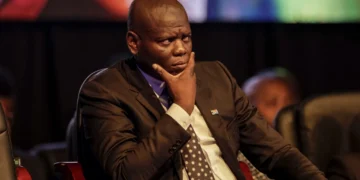
Acting Social Development Minister Sindisiwe Chikunga and the department briefed the National Council of Provinces Select Committee on Social Services on 17 June 2026, giving an update on the long-delayed Basic Income Support policy.
Deputy director-general for comprehensive social security Brenda Sibeko told members of Parliament that the department had asked the National Treasury for a meeting, expected either later in June or in early July, to hear whether it had answered the Treasury’s questions on the policy.
The department said it is still aiming to submit the draft policy to Cabinet for final approval by the end of March 2027. Public consultation and legislation would follow only after that.
Chikunga said the department first presented the draft policy to Cabinet on 26 November 2024, and that Cabinet then directed officials to strengthen it. According to the minister, this included renaming the instrument and tightening its rationale to foreground its developmental aims and links to economic opportunities.
Why it matters
The Basic Income Support grant is intended to give working-age adults aged 18 to 59 a more permanent form of income support than the temporary SRD grant currently provides.
About 8.5 million people rely on the SRD grant, Chikunga told the committee. The grant targets unemployed adults who are able to work but have no income.
The timing carries direct consequences for those recipients. The SRD grant is funded only until 31 March 2027, and the 2026 Budget did not allocate money to continue it beyond that date.
Sibeko told MPs the department might need to seek another extension of the SRD grant beyond March 2027 to avoid a break in support while the new policy and the required legislation are finalised.
Chikunga was clear that the proposed grant is not designed as a jobs programme. She said Basic Income Support is not a substitute for job creation, describing it instead as a complementary measure that links recipients to income-generating and sustainable livelihood opportunities through labour market facilitation.
The policy has faced years of delay, and MPs have repeatedly raised concerns about the pace. The central unresolved question remains affordability, with the department yet to secure the Treasury’s support for how the grant would be funded over the long term.
Key details and figures
The SRD grant was introduced in May 2020 during the COVID-19 pandemic and was originally meant to last six months. It has been extended each year since, with the current value set at R370 per beneficiary per month.
The 2026 Budget allocated R36.4 billion to continue the SRD grant until 31 March 2027, according to the National Treasury’s Budget Review and the department’s 2026/27 budget vote.
After Cabinet sent the first draft back in late 2024, the Treasury raised a range of questions and gave the department a three-page document setting out issues to be answered before it could support the policy. Sibeko said the department completed the additional research in February 2026 and updated the policy in response.
On 22 May 2026, the department and the Presidency held a workshop with the departments of Home Affairs, Employment and Labour, Small Business Development and Basic Education, alongside the South African Social Security Agency and Statistics South Africa, to refine the policy further.
The idea of a basic income grant in South Africa is not new. It was first proposed in 1998, with a technical proposal drafted in 2002 that did not gain Cabinet approval, and an expert panel assessed its feasibility in 2021 and 2022.
In earlier briefings, the department proposed setting an entry-level grant at the Lower Bound Poverty Line, with longer-term ambitions to address poverty measured at the Upper Bound Poverty Line.
Chikunga cautioned that the content of the draft policy could still change. She said it was difficult to present its detail because it still has to go to Cabinet, and that the current draft need not reflect the final policy.
What happens next
Sibeko set out the steps that follow the Treasury meeting. After receiving the Treasury’s feedback in July, the department would update the draft policy and submit it for a Socio-Economic Impact Assessment System review by the Presidency.
If supported, the draft would return to Cabinet for approval to be published for public consultation. Following public input and further revisions, it would again move through government processes before a final Cabinet decision targeted for the end of March 2027.
Should Cabinet approve the policy, amendments to the Social Assistance Act would be required before the grant could be implemented. The department has indicated the legislative process would only begin in the 2027/28 financial year.
Two questions remain open. The first is funding, which the Treasury has not yet signed off on. The second is continuity for current SRD recipients, which depends on whether a further extension is granted beyond March 2027.
Finance Minister Enoch Godongwana said on Wednesday that discussions on the grant that will replace the SRD grant were ongoing.