










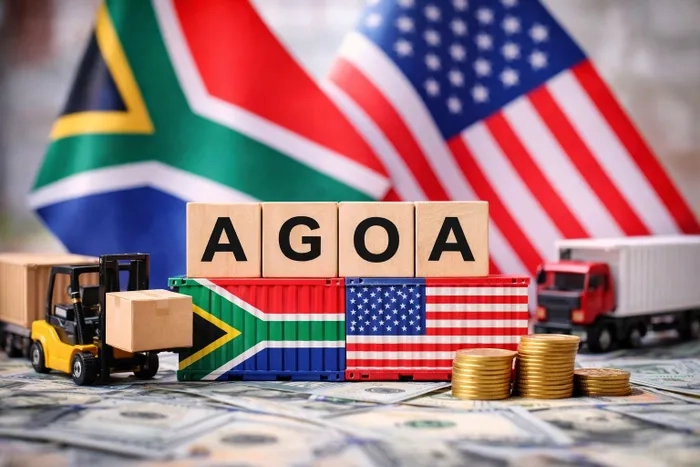
South Africa keeps duty-free access to the United States market for a further two years if the AGOA extension 2028 bill becomes law. The US Senate passed H.R. 6500 on 8 August 2026 by 90 votes to 6, moving the expiry date of the African Growth and Opportunity Act from 31 December 2026 to 31 December 2028. All 32 eligible sub-Saharan African countries remain in the programme, South Africa included. The bill now returns to the House of Representatives, which must agree to the Senate’s amended version before it can be signed into law.
AGOA timeline at a glance
| Date | What happened |
|---|---|
| May 2000 | AGOA signed into law in the United States |
| 30 September 2025 | AGOA lapsed with no replacement in place |
| 12 January 2026 | US House passed the AGOA Extension Act (H.R. 6500) by 340 votes to 54 |
| 3 February 2026 | Congress revived AGOA retroactively, but only until 31 December 2026 |
| 8 August 2026 | US Senate passed H.R. 6500 by 90 votes to 6, extending AGOA to 31 December 2028 |
| Still pending | House concurrence, then presidential signature |
What the AGOA extension 2028 bill actually does
The bill changes the date and very little else. According to the summary published by Congress, it extends duty-free treatment for products of eligible sub-Saharan African countries through 2028 under both the Generalised System of Preferences and AGOA, and carries the same period across to AGOA’s apparel provisions and the third-country fabric rule.
It also provides for refunds of duties paid on eligible goods that entered the United States after 30 September 2025 and before the date of enactment, covering the months when the programme had lapsed. Refund requests must be filed with US Customs and Border Protection with enough detail for the entry to be located or reconstructed.
AGOA itself has been in force since May 2000 and covers more than 1,800 product lines on top of what GSP already allows in duty-free. Eligibility is reviewed annually against conditions that include progress toward a market-based economy, the rule of law, political pluralism, due process, removing barriers to US trade and investment, reducing poverty, fighting corruption and protecting human rights. Those same conditions are why South Africa’s participation is questioned in Washington almost every year, as covered in our earlier outlook on AGOA and South Africa.
Duty-free access does not mean tariff-free
This is the part most coverage skips. AGOA removes the ordinary import duty on eligible products. It does not remove the separate tariff layers the United States has applied since 2025, which are imposed under different legal authorities and sit on top.
| Measure | Rate | Status |
|---|---|---|
| Section 301 baseline, from 24 July 2026 | 12.5% on most South African goods | In force, facing legal challenge |
| Section 232 steel and aluminium | 50% | In force |
| Section 232 vehicles | 25% | In force |
| AGOA preference | Ordinary duty removed on eligible products | Runs to 31 December 2026, extension to 2028 pending |
Confirm the current amount with the Department of Trade, Industry and Competition before relying on it, as fees change periodically. South Africa moved onto the upper Section 301 tier when the temporary Section 122 surcharge lapsed on 24 July 2026, which is the background to the 12.5% US tariff now applied to South African goods.
The practical difference between this layer and the ones before it is duration. Section 122 carried a hard 150-day statutory limit, and the measures struck down in February 2026 were tied to emergency powers. Section 301 duties carry no built-in expiry, which is why exporters are being advised to treat them as a standing cost rather than a temporary shock, a point examined in our coverage of why Section 301 duties look permanent.
What is at stake for South African exporters
Parliament’s trade committee has said AGOA and GSP together provide duty-free access for around 25% of South African exports to the United States, with the remaining 75% entering under ordinary World Trade Organisation terms. The Office of the United States Trade Representative puts total US goods trade with South Africa at an estimated $22.8 billion in 2025, with $16.5 billion of that flowing from South Africa into the US market.
The sectors with the most exposure are automotive, agriculture and processed food. Vehicle exports were among the heaviest casualties of the 2025 tariff round, and citrus, macadamia and wine producers all use AGOA lines. That pressure is already visible in the decline in South African wine exports.
Estimates that roughly half a million South African jobs depend on AGOA are widely quoted but are not an official government figure, and they predate both the tariff rounds and the 2025 lapse. Treat them as an order of magnitude rather than a current count.
The separate risk that has not gone away
Extending AGOA does not lock South Africa into it. Two bills introduced in the US Congress during 2025, H.R. 2633 in the House and S. 2752 in the Senate, both titled the US-South Africa Bilateral Relations Review Act, call for a review of relations with South Africa that includes removing the country from AGOA. Neither has advanced since introduction.
Eligibility is also reviewed each year by the US administration independently of what Congress does with the expiry date, and the annual determination is usually issued in December. Alongside that, Washington has continued to press for a larger commercial footprint, a tension set out in our reporting on American companies operating in South Africa.
Common questions South Africans are searching
Has AGOA expired? No. It lapsed on 30 September 2025 and was revived retroactively in February 2026, currently running to 31 December 2026.
Is South Africa still in AGOA? Yes. The country remains one of the 32 eligible beneficiaries and the Senate bill makes no change to the country list.
Is the AGOA extension law yet? Not yet. The Senate amended the bill on 8 August 2026, so the House must agree to that version before it reaches the president.
Does AGOA cancel the US tariffs on South African goods? No. AGOA removes ordinary import duty on eligible products. Section 301 and Section 232 tariffs are separate measures applied under different authorities.
Can exporters claim back duties paid during the lapse? The bill provides for refunds on eligible entries made after 30 September 2025 and before enactment, claimed through US Customs and Border Protection.
Where do I check whether my product qualifies? The Department of Trade, Industry and Competition and the International Trade Administration Commission handle AGOA queries for South African exporters.
What to watch
Three dates matter. The House vote on the Senate’s amended bill, which is tied to a government funding deadline at the end of September 2026. The annual US eligibility determination, usually announced in December. And 31 December 2026, which remains the legal expiry date until the extension is signed.