







Two forms, two people, one deadline
A change of vehicle ownership South Africa buyers and sellers go through is not a private arrangement between two people. The vehicle’s record has to be updated at a registering authority, and each side has a separate form to lodge.
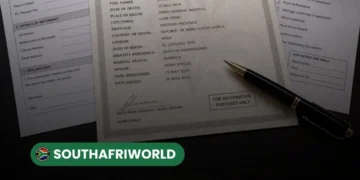
The seller lodges the NCO, the Notification of Change of Ownership or Sale of Motor Vehicle. It is the yellow form, issued under the National Road Traffic Act of 1996.
The buyer lodges the RLV, the Application for Registration and Licensing of Motor Vehicle.
Both have 21 days. The seller must notify their registering authority within 21 days of the sale, and the buyer must apply to register the vehicle within 21 days of buying it.
What the seller does
On the NCO form, the seller completes parts A and C. The buyer completes part B. Both sign.
The seller then hands the current registration certificate to the buyer, and lodges the NCO with their own registering authority.
That last step is the one sellers skip, and it is the one that protects them. Until the NCO is lodged and processed, the vehicle stays registered in the seller’s name on the system. Licence renewal notices keep arriving. Traffic fines incurred by the new driver are issued against the registered owner. Under the demerit system, infringements attach to whoever the record says owns the car.
If you sell a car and do nothing else, lodge the NCO. It is the single most useful thing a seller can do.
What the buyer does
The buyer completes the RLV and takes it to a registering authority along with the supporting documents.
The registering authority checks the application, charges the prescribed provincial or local fees, and updates the record. A registration certificate is then issued to the title holder.
Note the distinction between owner and title holder. If the vehicle is financed, the bank is usually the title holder while you are the owner. Both are recorded, and both can change.
What to take with you
The South African Government’s guidance for changing owner or title holder particulars asks for:
| Document | Detail |
|---|---|
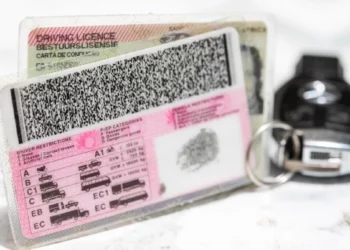
| Identification | A copy of your ID if you are a South African citizen |
| Identification, foreign nationals | The original and a certified copy of the ID issued by your country of origin, plus your temporary residence permit |
| Proof of residential address | A utility account or similar |
| Registration certificate | Handed over by the seller |
| Proof of purchase | A receipt or agreement of sale |
There is a useful detail on proof of address. If the utility bill is not in your name, the person whose name is on it must make an affidavit declaring that you live at that address, and the bill must be attached to the affidavit. This catches out anyone renting or living with family, and it is a common reason people are turned away at the counter.
The roadworthy question
A roadworthy certificate is required to register a vehicle in a new owner’s name. Practice varies by province and vehicle class, so confirm with the registering authority you intend to use before you book the test.
Buyers usually arrange it, though a seller sometimes provides one to move the sale along. Either way it needs to be in hand before the registration application goes in.
The rule people break without knowing
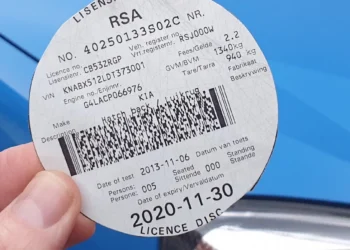
Regulation 53 states that no person may buy, sell or trade with an unregistered or unlicensed motor vehicle. It is printed on the NCO form itself.
In practice this means a car sitting on expired licences is not simply a cheap buy with some admin attached. Sort the licensing position out before money changes hands, not after.
Where the forms come from
Both forms are on the NaTIS site under downloads, then forms, then road traffic related forms. The NCO and the RLV are both listed there and can be downloaded and printed.
You can also collect them at a registering authority. Some provinces accept change of ownership notifications through their own e-services portals, so check whether yours does before you queue.
If a past transfer was never completed
This happens often. Someone sold a car years ago, never lodged the NCO, and is still receiving notices for it.
Take whatever proof of the sale you have to your registering authority and explain the position. What they can do depends on how long ago it was and what documentation survives, so go in person and go early rather than ignoring the notices. Identity documents needed for the process are handled through Home Affairs.
Where to check
Fees are set provincially and locally, so there is no single national figure for registering a vehicle in your name. Ask your registering authority what it charges for your vehicle class.
For the forms and the current requirements, use the NaTIS site or the Department of Transport, and confirm anything province-specific with the registering authority you will actually be visiting.