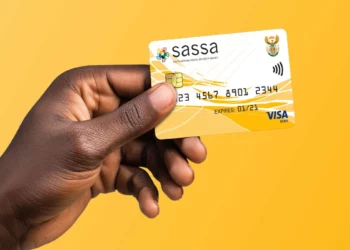






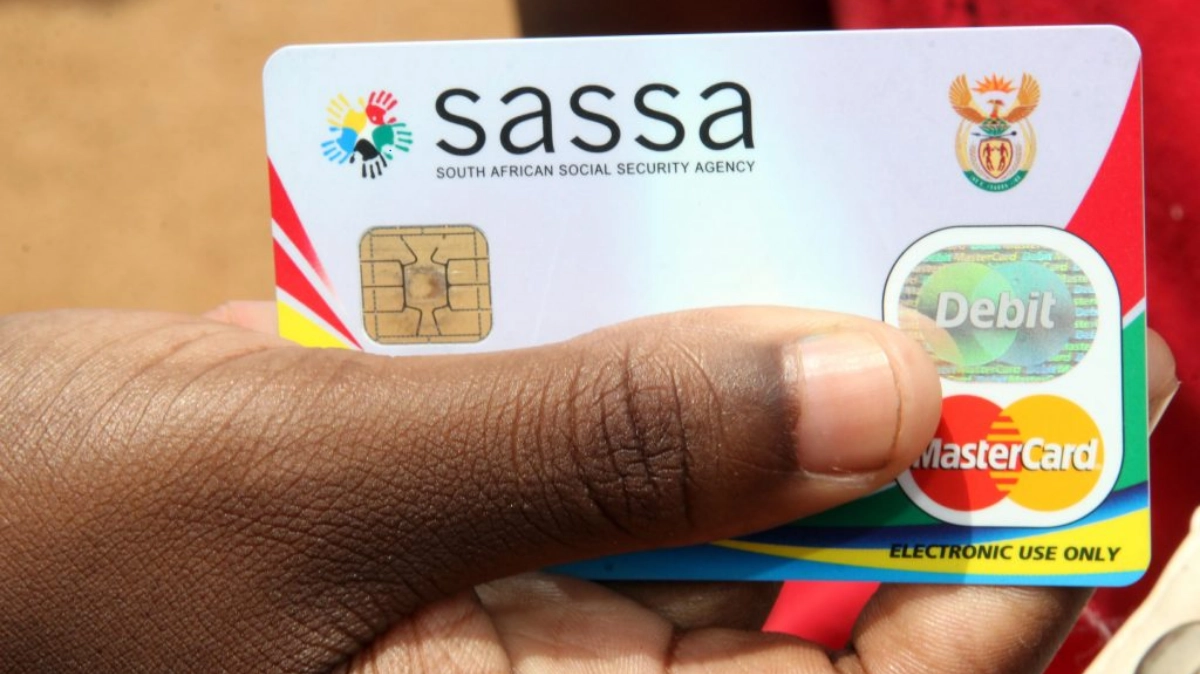
The SASSA child support grant pays R580 per child per month, effective from 1 April 2026. It is paid to the primary caregiver of a child under 18, not to the child. Applying is free, and you do it in person at a SASSA office. If your application is approved, you are paid from the date you applied, not the date of approval. Children’s grants are paid third each month, after the older persons and disability grants.
What the SASSA child support grant pays
| Item | Amount | Effective from |
|---|---|---|
| Child support grant, per child | R580 a month | 1 April 2026 |
| Child support grant top-up, per qualifying child | R290 a month | 1 April 2026 |
| Total where the top-up applies | R870 a month | 1 April 2026 |
| Cost of applying | Free | Standing |
The top-up is an extra amount listed on the national government services page alongside the basic grant. It is aimed at orphaned children in the care of a relative. The published material does not set out the qualifying conditions in detail, so confirm with SASSA whether the child in your care qualifies before you budget for it.
Who qualifies
As the caregiver, you must be the child’s primary caregiver, which can mean a parent, a grandparent, another relative, or a child over 16 heading a household. You must be a South African citizen or permanent resident, and you and the child must both live in South Africa.
The child must be under 18, must not be cared for in a state institution, and must live with you. You must not be paid to look after the child.
You cannot claim for more than six children who are not your biological or legally adopted children. If you are not the parent, you must prove you are the primary caregiver, using an affidavit from a police official, a social worker’s report, an affidavit from the biological parent, or a letter from the principal of the school the child attends.
The income limit, and why official pages disagree
This is the figure most people get wrong, and the official sources currently do not agree with each other.
SASSA’s own means test explainer, issued for the amounts that took effect on 1 April 2026, sets the limit at R5,800 a month for a single caregiver, and R11,600 a month for a married couple’s combined income. That matches the long-standing structure of the test, where the child support grant threshold is ten times the annual value of the grant for a single applicant and twenty times for a married couple.
The national government services page for the grant tells a different story. It gives the current R580 amount, but on the same page it still lists an income limit of R52,800 a year for a single caregiver and R105,600 a year for a married couple. That works out to R4,400 and R8,800 a month. Some provincial service pages carry a third set of numbers again, around R61,200 a year for a single caregiver. A provincial page is never the authority for a national threshold, and those pages appear not to have been refreshed.
Confirm the current income limit with SASSA on 0800 60 10 11 before relying on it, as the published figures conflict and the threshold changes with the grant value. If you were turned away in a previous year because your income was above an older limit, it is worth checking again. Being over a stale published figure is not the same as being over the current one.
Documents to take to the SASSA office
Take your 13-digit barcoded identity document or Smart ID card, and the child’s birth certificate. If you do not yet have the child’s certificate, you can apply for an unabridged birth certificate at Home Affairs while your grant application is in progress.
You also need proof of your earnings, proof of any maintenance you receive for the child, your marriage certificate if you are married, and the custody order if you are divorced. If a parent has died or is missing, bring the death certificate or a missing person’s report.
If you have no ID at all, SASSA accepts an affidavit in its standard format, sworn before a Commissioner of Oaths who is not a SASSA official, together with a sworn statement from someone who knows you and the child, and proof that you have applied to Home Affairs. Many banks now let you get a Smart ID at a bank branch, which is usually faster than a Home Affairs queue.
How to apply
- Go to the SASSA office nearest to where you live. Applications are taken in person.
- Complete the application form in the presence of a SASSA official. Only you or a SASSA official may fill it in.
- Hand over your documents and answer the income questions.
- Take the receipt you are given and keep it. It is your only proof that you applied.
- Wait for the written outcome. Processing can take up to three months.
If you cannot get to the office because you are ill, elderly or disabled, you can appoint a procurator at the SASSA office or give someone power of attorney to apply and collect on your behalf.
When you get paid
Children’s grants are paid on the third payment day of the month under the schedule the Department of Social Development approved for 2026/27.
| Month | Children’s grant payment date |
|---|---|
| September 2026 | 4 September 2026 |
| October 2026 | 6 October 2026 |
| November 2026 | 5 November 2026 |
| December 2026 | 4 December 2026 |
| January 2027 | 7 January 2027 |
| February 2027 | 4 February 2027 |
| March 2027 | 4 March 2027 |
Payments are never made on the first of the month, on a Monday, on a weekend, or the day after a public holiday. Money stays on your account or card after the payment date, so there is no need to queue on the day.
Common problems
Application declined. SASSA must tell you in writing why. You can appeal to the Minister of Social Development at the national office of the Department of Social Development, and you have 90 days from being notified to do it. This is a different route from the one used for the R370 grant, where the SRD grant has its own appeal channel.
Grant suspended. A change in your circumstances, the outcome of a review, failure to cooperate with a review, or an error in the original approval can all trigger a suspension.
Grant lapsed. The grant ends if the child dies, is admitted to a state institution, leaves the country, or turns 18. It also lapses if you do not claim it for three consecutive months.
Review notices. SASSA notifies you three months ahead of a review or a life certificate deadline. Ignoring the notice is the most common way beneficiaries lose a grant they still qualify for. New applicants for all grants now go through biometric verification, and Treasury has budgeted on the assumption that tighter checking will reduce the number of child support grant recipients over the next few years.
Frequently asked questions
How much is the child support grant in 2026?
R580 per child per month from 1 April 2026, up from R560.
Can I apply for the child support grant online?
Not reliably. The national services page directs applicants to a SASSA office and states that forms are not available online. An online grant portal exists, but the office route is the one the official guidance describes.
How long does it take to be approved?
Up to three months. If approved, payment is backdated to the date you applied.
Can a grandmother or aunt claim the grant?
Yes. Any primary caregiver can claim, including a child over 16 heading a household, provided you can prove primary care and you are not paid to look after the child.
How many children can I claim for?
There is no cap on your own biological or legally adopted children. For children who are neither, the limit is six.
Does it cost anything to apply?
No. Applying is free, and so is appealing. Anyone charging you a fee to lodge or speed up an application is not acting for SASSA. To compare what other official documents do cost, see our guide to Home Affairs fees and processing times.
What to watch
Several unofficial grant sites state that the next child support grant increase falls in October 2026. Neither the Budget documents nor the Department of Social Development schedule shows an October adjustment to this grant. The October 2026 step named in the Budget applies to the foster child grant. On current published information, R580 holds until the next annual adjustment, which would be announced in the February Budget and take effect in April 2027.
The second thing to watch is the income limit. If the national services page is updated to match SASSA’s 2026 figure, or a fresh regulation is gazetted, the qualifying threshold moves and this page changes with it.