






What we know so far
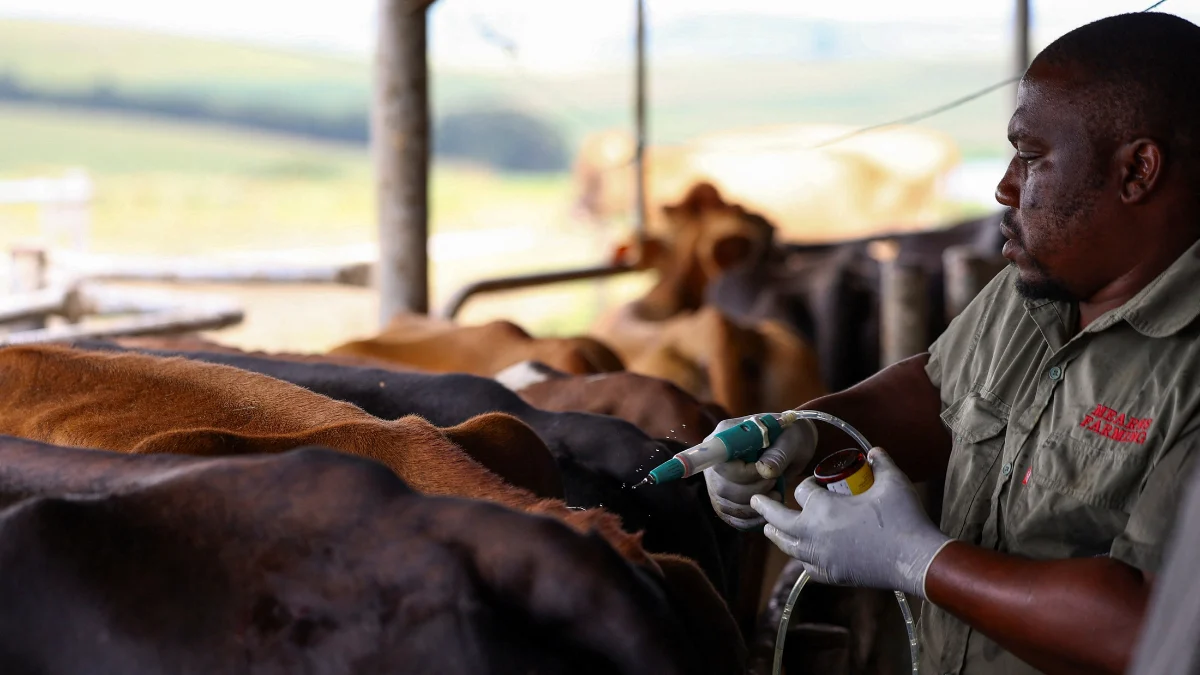
South Africa has received two million doses of foot-and-mouth disease (FMD) vaccine from Turkish manufacturer Dollvet, Agriculture Minister John Steenhuisen announced on Tuesday, 22 April 2026. Distribution to all nine provinces will begin within days.
The shipment is the first tranche of a six-million-dose order placed with Dollvet through its local agents, Dunevax. A further five million doses from Argentine supplier Biogénesis Bagó have been ordered through Onderstepoort Biological Products (OBP) and will arrive in two batches of 3.5 million and 1.5 million doses once the South African Health Products Regulatory Authority (SAHPRA) approves the Section 21 importation application.
The announcement marks the latest advance in the government’s mass vaccination campaign against what officials have described as the country’s most severe FMD outbreak in decades. Since February 2026, South Africa has received a total of four million imported doses, comprising 2.5 million from Biogénesis Bagó and 1.5 million from Dollvet, on top of two million doses imported in the last quarter of 2025. Those supplies have enabled the vaccination of 2.1 million animals nationally.
Early results are encouraging. According to a ministerial update issued on 17 April 2026, no new infections have been recorded in herds that have already been vaccinated. Between February and 26 March 2026, provinces vaccinated a total of 2 033 289 animals. Minister Steenhuisen called this a clear indication that the vaccines are effective and that the strategy is working to protect the national herd.
Why it matters
South Africa’s livestock sector is a pillar of the agricultural economy. Agriculture contributed R134.8 billion to GDP in 2025, recording 17.4% year-on-year growth that outperformed every other sector, according to Statistics South Africa data released in March 2026. Livestock production is central to that contribution and supports hundreds of thousands of jobs in farming, feedlots, abattoirs and export-related businesses.
FMD has inflicted severe economic damage since the current outbreak cycle intensified from April 2025. The disease, caused by a highly contagious virus affecting cloven-hoofed animals, has triggered livestock movement restrictions, auction closures and international trade suspensions. China suspended all imports of cloven-hoofed animals and related products from South Africa, a move the Red Meat Industry Services (RMIS) described as far-reaching in its impact on producers, feedlots, abattoirs and exporters.
The vaccination campaign is therefore about more than disease control. Minister Steenhuisen stated that the department has procured all matched vaccines currently available on the international market and has secured a steady supply. The strategic objective is to vaccinate the national herd sufficiently to achieve World Organisation for Animal Health (WOAH) recognition of FMD-free status with vaccination. That designation would allow South Africa to access international red meat markets that have been closed for decades due to FMD.
For communal and smallholder farmers, the campaign carries particular significance. Livestock often represents the primary store of wealth and income in rural areas. Movement restrictions imposed during outbreaks prevent farmers from selling animals at auctions or transporting them to abattoirs, trapping them in a cycle of rising feed costs and lost revenue.
Key details and figures
The provincial allocation of the latest two-million-dose Dollvet consignment follows an amended risk-based distribution policy. According to the Department of Agriculture statement, the doses will be distributed as follows: KwaZulu-Natal receives the largest allocation at 192 000 doses, followed by Free State and North West at 182 400 each, Western Cape at 150 000, Limpopo at 150 000, Mpumalanga at 144 000, Eastern Cape at 135 400, Gauteng at 124 800 and Northern Cape at 100 000.
Dedicated allocations have been set aside for critical agricultural sectors: 150 000 doses for the feedlot industry, 150 000 for the pig industry and 100 000 for the dairy industry. A reserve of 239 000 doses will be held back for emergency deployment where needed.
As of 10 April 2026, a total of 1 317 FMD cases had been recorded across the country. Free State reported the highest number at 328 cases, followed by North West with 247, Gauteng with 241, KwaZulu-Natal with 225 and Mpumalanga with 140. Eastern Cape recorded 71 cases, Limpopo 49, Western Cape 13 and Northern Cape just three.
Minister Steenhuisen attributed the rising case numbers to improved surveillance rather than a worsening outbreak. The department has implemented a centralised reporting system enabling earlier detection and faster data capture. Heightened awareness has also helped identify sub-clinical cases, where animals carry the virus without showing obvious symptoms, that would previously have gone undetected.
The vaccination drive has shown particular success in the dairy sector. All recorded dairy farms in the Free State have been vaccinated. Major dairies in the Western Cape have been fully attended to. KwaZulu-Natal has allocated 250 000 doses to the Milk Producers Organisation, with an additional 100 000 recently added. In the Eastern Cape, more than 78 000 doses have been provided to the MPO.
Domestically, the Agricultural Research Council (ARC) is advancing local vaccine production capacity. The ARC aimed to produce 20 000 doses per week by the end of March 2026, with plans to scale to 200 000 doses per week by 2027, according to South African Government News. The country had not produced its own FMD vaccine since 2005 due to ageing infrastructure that fell below international Good Manufacturing Practice standards.
The estimated vaccine requirement for FMD for the 2025/2026 financial year stands at R1.2 billion, with each dose costing approximately R100, according to a statement from Minister Steenhuisen cited in earlier reporting.
The specific virus strain circulating in South Africa is the SAT1 topotype 3. According to the ministerial statement, the same strain has been reported in Turkey, Azerbaijan, Lebanon, Israel, Cyprus and Syria between October 2025 and February 2026. Countries including Greece, China, Cyprus, Israel and Germany have also experienced FMD outbreaks, indicating the challenge is not unique to South Africa.
What happens next
The most immediate next step is the publication of the Routine Vaccination Scheme for FMD (RVS-FMD) under Section 10 of the Animal Diseases Act of 1984. Minister Steenhuisen announced the intention to publish the scheme on 10 April 2026. The public comment period closed on 17 April, and the department is currently evaluating submissions. The final scheme is expected to be published on 24 April 2026, two days from the date of the vaccine arrival announcement.
The routine vaccination scheme would represent a structural shift in South Africa’s approach to FMD, moving from reactive outbreak management to a sustained, programme-based strategy modelled on the approach used by Brazil and Argentina, both of which achieved WOAH-recognised FMD-free status through mass vaccination.
On the supply side, the arrival of a further 3.5 million doses from Biogénesis Bagó is pending SAHPRA approval. The remaining four million doses of the Dollvet order are also expected to arrive in the coming weeks. Once all outstanding orders land, South Africa will have received approximately 13 million imported doses since late 2025.
The longer-term goal of the ARC’s domestic vaccine production programme is to reduce reliance on imports and build self-sufficiency. Scaling production to 200 000 doses per week would provide roughly 10.4 million doses per year from local sources alone.
Whether the vaccination campaign succeeds in restoring WOAH-recognised FMD-free status will depend on sustained funding, continued farmer cooperation and consistent enforcement of movement controls. The question of when international trade partners, including China, will lift their import suspensions remains unresolved and will likely hinge on South Africa demonstrating a sustained period without new outbreaks in vaccinated herds.