








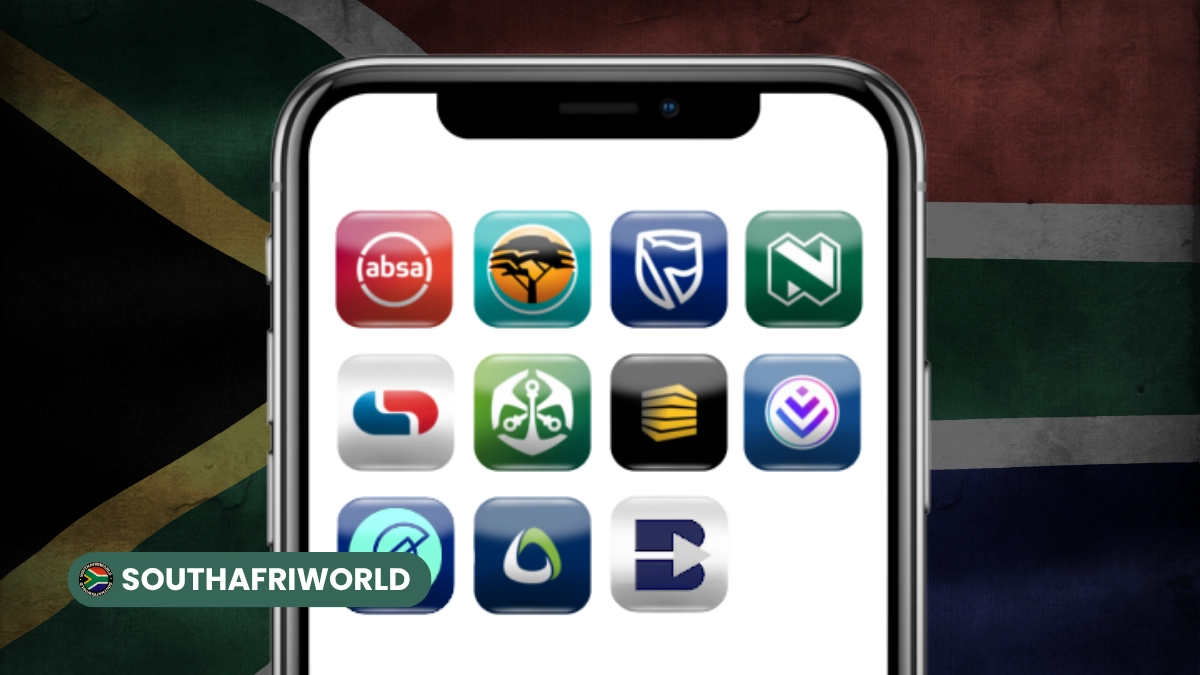
South Africans using banking apps on their phones are facing a growing threat from robbery-related kidnappings in which criminals force victims to unlock devices, open banking apps and transfer money under duress. The clearest verified basis for that warning comes from the Institute for Security Studies’ analysis of SAPS crime data, which says many kidnapping cases now take the form of “express kidnappings” linked to hijackings and armed robberies, where victims are held for hours or days so criminals can force ATM withdrawals or transfers through mobile banking applications.
The stronger and more accurate angle here is not that a completely new form of crime has suddenly appeared overnight. It is that South Africa’s kidnapping problem has become more closely tied to fast, opportunistic robberies, and that banking apps now make it easier for criminals to try to extract money immediately. SAPS data analysed by ISS show kidnappings rose by 264% over the past decade, from 4,692 in 2014/15 to 17,061 in 2023/24, with Gauteng accounting for more than half of reported incidents.
What we know so far
ISS said in its analysis that most kidnappings in South Africa are not classic ransom cases but are instead linked to aggravated robberies such as car hijackings, truck hijackings, home robberies and public-space robberies. It said these often take the form of express kidnappings where victims are kept temporarily so that criminals can coerce them into drawing cash or transferring funds held in bank accounts through mobile banking applications. ISS further said that of the 14,646 cases sampled from the 17,061 kidnappings reported in 2023/24, aggravated robberies accounted for 66% of all kidnappings, with 44% committed during a hijacking and 22% during another type of robbery.
The official police picture also shows kidnapping remains a serious live threat. In the third-quarter crime statistics for October to December 2025, SAPS recorded 208 ransom-related kidnappings nationally, with Gauteng contributing 66.3% of those cases. While that specific category deals with ransom-related incidents rather than the full express-kidnapping picture, it still underlines how heavily Gauteng features in South Africa’s kidnapping landscape.
Recent SAPS operations also show the crime taking a direct financial form. In a Mpumalanga police statement dated 22 February 2026, SAPS said five suspects were netted in an intelligence-driven operation targeting a group suspected of involvement in kidnapping incidents around KwaMhlanga and Soshanguve, where victims were reportedly coerced into withdrawing cash from ATMs. That is not the same as a full national trend analysis, but it is a current, official example of kidnappings being used to extract money immediately from victims.
Why it matters
What changes the risk for banking-app users is speed. In older robbery models, criminals often depended on bank cards, PINs or ATM access alone. With smartphones now central to everyday banking, criminals may try to force a victim to unlock the phone itself, approve prompts, create transfers or expose linked accounts and digital wallets. ISS explicitly said victims in express kidnappings are often coerced into transferring funds into accounts controlled by criminals through mobile banking applications.
The fraud-prevention ecosystem has also been warning about the phone itself becoming the point of attack. The Southern African Fraud Prevention Service says “app scams” occur when fraudulent or malicious mobile applications are installed on a device, allowing criminals to hack functions, steal stored data and gain access to accounts accessible via that device. The Banking Association South Africa has separately warned that fake apps are on the rise and has urged users to download apps only from official stores, avoid links sent by SMS or social media, and notify their bank immediately if a fake app may have been installed.
There is therefore a practical overlap between physical crime and digital fraud. A kidnapping or robbery can become more damaging when the victim’s phone contains banking apps, saved credentials, email access or digital wallets. That does not mean banking apps themselves are defective. It means they have become part of the criminal target environment in a country where kidnappings linked to robbery have risen sharply and where phones are often the gateway to money, identity and authentication.
Key details and figures
The key numbers show why the warning matters. ISS says kidnappings increased by 264% over the past decade, reaching 17,061 recorded cases in 2023/24. Its analysis says Gauteng accounted for 51% of reported incidents, followed by KwaZulu-Natal at 20%, with the Western Cape and Mpumalanga each at 6% and the Eastern Cape at 5%. It also says aggravated robberies were behind 66% of the kidnappings analysed, and that nearly 80% of kidnappings in Gauteng were linked to hijacking or another robbery.
On the fraud side, the Banking Association South Africa’s warning on fraudulent app downloads says fake apps may request unnecessary permissions including camera, SMS, contacts and banking information. Its guidance is straightforward: only use official app stores, check developer details and reviews, avoid installation links sent by SMS, email or social media ads, uninstall suspicious apps immediately, reset passwords, run a malware scan and notify the bank.
TymeBank’s head of fraud, Bonolo Sebolai, has also described Remote Access Trojan attacks as one of the most dangerous fraud types affecting South African consumers, warning that criminals can use malware to control a device in real time while the customer is still using it. Sebolai said consumers should download apps only from official stores, hang up and contact the bank directly if something feels wrong, and act immediately if they suspect their device has been compromised. That statement is not a police warning about kidnapping specifically, but it reinforces the broader verified risk around compromised phones and banking access.
What happens next
The next phase of this story is likely to be less about a single announcement and more about continued convergence between violent robbery, kidnapping and digital financial crime. The official and research record already shows that robbery-related kidnappings are a significant part of South Africa’s crime pattern, especially in Gauteng, and that criminals are using both physical coercion and phone-based fraud tactics to get access to money more quickly.
For readers, the most useful takeaway is not panic but precision. This is not evidence that everyone with a banking app is about to be kidnapped. It is a documented warning that smartphones have become financially valuable targets in robberies and kidnappings, and that the safest response is to reduce exposure: avoid installing apps from links, keep as little sensitive data as possible on the device, report a stolen or compromised phone to the bank immediately, and treat suspicious urgency around phone access or account verification as a red flag.