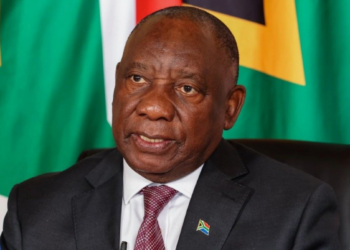
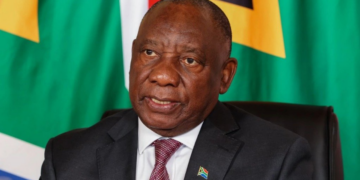


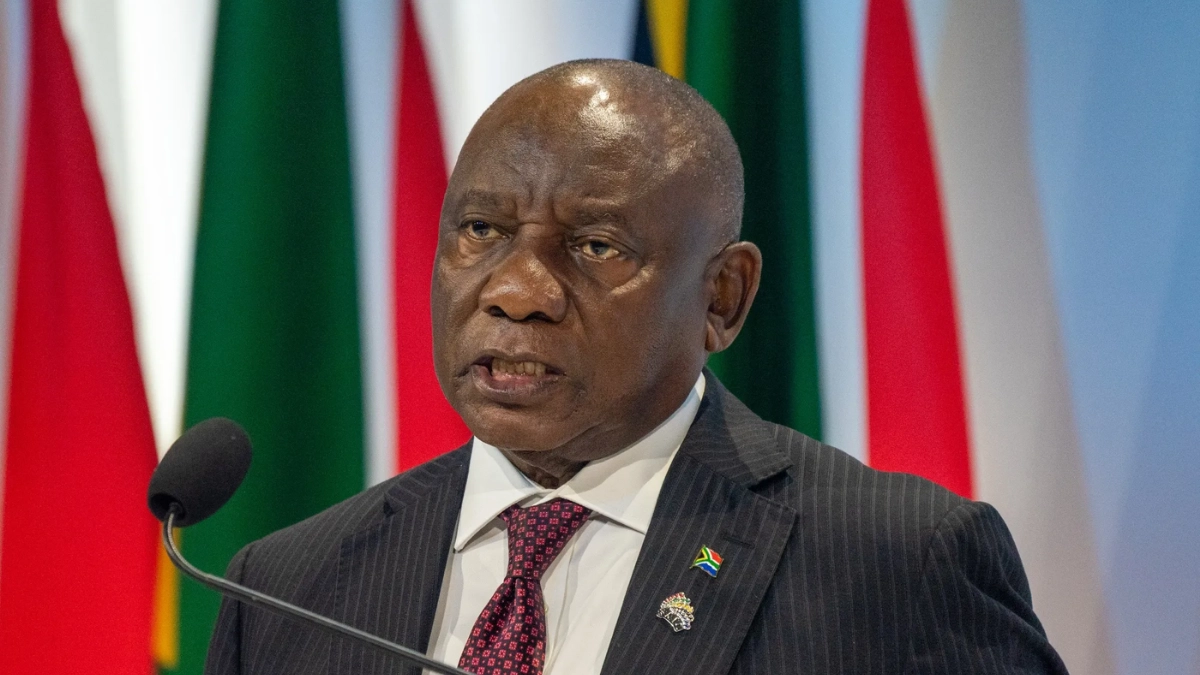
President Cyril Ramaphosa is due to receive the credentials of United States ambassador-designate Leo Brent Bozell III on Wednesday, 8 April 2026, in a formal diplomatic ceremony that will mark an important procedural step in one of South Africa’s most strained bilateral relationships. Bloomberg, citing a statement from Ramaphosa’s office issued on Monday, reported that Bozell will present his credentials alongside envoys from 19 other countries.
The development matters because the ceremony is not just symbolic. Under diplomatic practice, letters of credence are the documents through which a head of state formally accepts a foreign envoy as ambassador. In this case, the moment comes after weeks of friction between Pretoria and Washington and after Bozell himself became part of that friction soon after arriving in South Africa.
The stronger and more accurate framing is therefore not that Ramaphosa is merely receiving a visitor. It is that South Africa is completing a formal accreditation step for Washington’s envoy at a time when the bilateral relationship remains tense, politically sensitive and closely watched. That gives the ceremony more weight than an ordinary diplomatic diary entry.
What we know so far
The clearest verified current development is the scheduled credentials ceremony itself. Bloomberg, carried by Daily Investor on Monday, reported that Bozell’s formal accreditation is set for 8 April 2026 and that he will present credentials with 19 other envoys, including Cuba, according to a statement from Ramaphosa’s office.
Bozell is not new to Pretoria. In February, he submitted copies of his letters of credence to the Department of International Relations and Cooperation. EWN reported at the time that DIRCO spokesperson Nelson Kgwete said Bozell was considered duly accredited and authorised to begin his duties, while still being expected to present his original letters of credence to Ramaphosa at a later formal ceremony.
That distinction helps explain why the 8 April event matters. The February handover to DIRCO allowed Bozell to begin work on the ground, but the presidential ceremony remains the formal head-of-state step that completes the public diplomatic process in the usual way. In practical terms, Wednesday’s event is the moment that turns a pending protocol step into a fully completed one.
Why it matters
This is happening against the backdrop of one of the sharpest recent downturns in relations between South Africa and the United States. The AP reported in March that the rift had deepened after Bozell criticised South Africa’s domestic and foreign policies, including its ties with Iran, its affirmative-action laws and a court ruling on the chant “Kill the Boer”. DIRCO then summoned him to explain what Minister Ronald Lamola described as undiplomatic remarks.
The wider relationship had already been under strain before that episode. Bloomberg reported that tensions have worsened since Donald Trump returned to office, with Washington expelling South Africa’s ambassador to the US last year, criticising Pretoria’s ties with Iran, Russia and China, and taking other hostile steps in trade and diplomacy. That means the credentials ceremony should not be read as proof that the two countries have resolved their disagreements. It is better understood as a necessary diplomatic step within a still-fragile relationship.
For South African readers, the practical relevance is broader than foreign policy theatre. The United States remains an important trade, investment and diplomatic partner. Any formal move that stabilises communication channels matters because friction between the two governments can spill into trade, investment sentiment, multilateral cooperation and the wider tone of bilateral engagement.
Key details and figures
Three details stand out from the verified reporting. First, the ceremony is expected on Wednesday, 8 April 2026. Second, Bozell is expected to present his credentials alongside 19 other envoys. Third, this follows his February submission of copies of his letters of credence to DIRCO, which allowed him to start operating in Pretoria before the formal presidential ceremony.
There is also a political detail that matters. Bozell is not arriving quietly into office. AP reported that he had already been summoned by South African authorities over remarks seen as disrespectful to the judiciary and to South Africa’s constitutional order. That means the accreditation ceremony comes after a visible diplomatic stumble rather than before one.
At the same time, the ceremony should not be overstated. Presenting credentials does not itself reset policy differences on South Africa’s foreign alignments, land policy, race-based redress measures or its International Court of Justice case against Israel. It simply formalises the status of the envoy representing the United States in Pretoria. Whether the relationship improves afterward will depend on conduct and policy, not protocol alone.
Timeline
Bozell arrived in South Africa in February and soon submitted copies of his letters of credence to DIRCO, allowing him to begin duties in Pretoria while awaiting the formal presidential ceremony. In March, he was summoned by South African authorities after controversial public remarks about the judiciary and South African policy. On 6 April, Bloomberg reported that Ramaphosa’s office had scheduled the formal credentials presentation for 8 April.
What happens next
The immediate next step is straightforward. If the ceremony proceeds as scheduled on Wednesday, Ramaphosa will receive Bozell’s letters of credence in Pretoria as part of a broader credentials event for multiple heads of mission. That will complete the formal protocol step that has remained pending since Bozell’s February arrival.
What matters after that is whether the tone of engagement changes. The record so far suggests caution. South Africa has already had to push back publicly against Bozell’s remarks, and Washington’s posture toward Pretoria has remained confrontational on several fronts. The ceremony may reduce one procedural ambiguity, but it does not by itself remove the political tensions that produced the ambiguity in the first place.
For now, the safest editorial conclusion is narrow and factual. Ramaphosa is expected to receive the US envoy’s credentials on 8 April 2026. That is a real and current diplomatic development. It may create space for more orderly engagement, but it is not yet evidence of a substantive repair in South Africa-US relations.