






• About us
  • Advertise
  • Terms and Conditions
  • Editorial Policy
  • Privacy Policy
  • Contact
Southafriworld
  • Home
  • News
    • All
    • Business
    • Crime
    • Economy
    • Tech
    • Tourism
    New car sales in SA hit a 12-year high | Southafriworld

    New car sales hit 12-year high: what’s driving the boom

    Smart ID bank branch finder now live | Southafriworld

    New online tool shows where to get your smart ID at a bank

    Petrol price cut 52c, diesel up in August | Southafriworld

    Petrol drops 52c but diesel jumps R1.38 from Wednesday

    Southern Africa growth set to slow in 2026 | Southafriworld

    AfDB sees Southern Africa growth slowing to 2.1% in 2026

    Tshwane loses R155 million in grants | Southafriworld

    Tshwane loses R155 million meant for water and roads

    Minimum Wage South Africa 2026: R30.23 | Southafriworld

    Minimum wage South Africa 2026: hourly and monthly rates

    SARS Tax Season 2026: Key Deadlines | Southafriworld

    SARS tax season 2026: deadlines and how to file

    SASSA Grant Amounts 2026: Full List | Southafriworld

    SASSA grant amounts 2026: the full list and payment dates

    South Africa tourism arrivals up 12.3% in 2026 | Southafriworld

    SA tourism arrivals climb 12.3% to 5.5 million in 2026

    • Business
    • Crime
    • Economy
    • Tech
    • Tourism
  • About us
    • Masthead
    • Editorial Policy
    • Privacy Policy
    • Terms and Conditions
    • Corrections Policy
  • Advertise
  • Contact Us
No Result
View All Result
  • Home
  • News
    • All
    • Business
    • Crime
    • Economy
    • Tech
    • Tourism
    New car sales in SA hit a 12-year high | Southafriworld

    New car sales hit 12-year high: what’s driving the boom

    Smart ID bank branch finder now live | Southafriworld

    New online tool shows where to get your smart ID at a bank

    Petrol price cut 52c, diesel up in August | Southafriworld

    Petrol drops 52c but diesel jumps R1.38 from Wednesday

    Southern Africa growth set to slow in 2026 | Southafriworld

    AfDB sees Southern Africa growth slowing to 2.1% in 2026

    Tshwane loses R155 million in grants | Southafriworld

    Tshwane loses R155 million meant for water and roads

    Minimum Wage South Africa 2026: R30.23 | Southafriworld

    Minimum wage South Africa 2026: hourly and monthly rates

    SARS Tax Season 2026: Key Deadlines | Southafriworld

    SARS tax season 2026: deadlines and how to file

    SASSA Grant Amounts 2026: Full List | Southafriworld

    SASSA grant amounts 2026: the full list and payment dates

    South Africa tourism arrivals up 12.3% in 2026 | Southafriworld

    SA tourism arrivals climb 12.3% to 5.5 million in 2026

    • Business
    • Crime
    • Economy
    • Tech
    • Tourism
  • About us
    • Masthead
    • Editorial Policy
    • Privacy Policy
    • Terms and Conditions
    • Corrections Policy
  • Advertise
  • Contact Us
No Result
View All Result
Southafriworld
No Result
View All Result
Home News

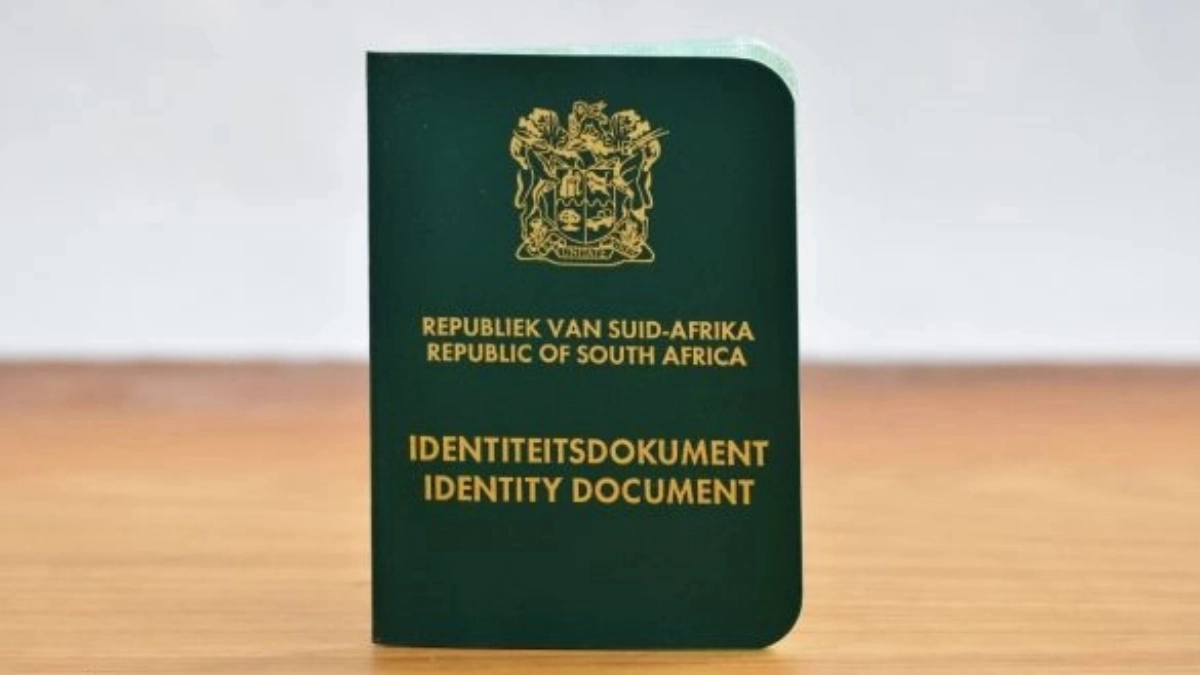
End of green ID books begins in South Africa

Green ID books in South Africa are moving closer to phase-out as Home Affairs expands Smart ID access and prepares to stop issuing the old document.

Ezra Labuschagne by Ezra Labuschagne
9 March 2026, 14:00
in News
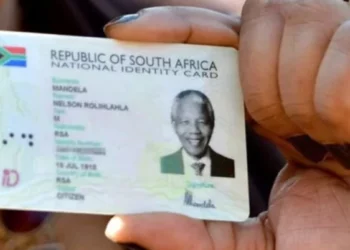
South Africans applying for Smart ID cards as green ID books in South Africa move closer to phase-out

The long decline of South Africa’s green ID book is entering a more serious phase, with the Department of Home Affairs now formally linking the document’s discontinuation to its wider Smart ID and digital identity rollout. The shift does not mean the green ID book has already been scrapped, but it does show that government planning has moved from broad intent to a more structured phase-out strategy.

That matters because the green ID book still remains in wide use across the country, even as officials warn that it is more vulnerable to fraud than the Smart ID card. Home Affairs Minister Leon Schreiber said in September 2025 that there were still 18 million green IDs in use in South Africa, nearly a decade and a half after the Smart ID was introduced, and described the document as a major fraud risk.

Green ID books are being phased out, not instantly cancelled

The most important point for South Africans is that this is not an overnight cancellation of the green ID book. Home Affairs’ current planning documents show the department is working toward discontinuing the green barcoded ID book as part of universal enrolment into the Smart ID system, but the transition depends on access expanding first through live capture offices, banks, kiosks and mobile units.

In its 2025/26 Annual Performance Plan, Home Affairs said the green barcoded ID book is susceptible to fraud, that the aim is to replace all green ID books with Smart ID cards for eligible citizens, and that the discontinuation of the green barcoded ID would be unpacked in the 2026/27 annual performance plan. That wording is significant because it shows the department is now treating the end of the green book as an active policy step rather than a distant long-term ambition.

At the same time, there is still no public announcement that existing green ID books have already lost their legal validity. In fact, Home Affairs has previously made clear that the green barcoded ID book remains a legal form of identification until Smart ID access is sufficiently rolled out, and the department’s more recent language suggests that the legal end-point will come only once broader access problems are solved.

Why Home Affairs wants the green ID book gone

The department’s case against the old document is centred on security, fraud prevention and modernisation. In January 2026, Home Affairs said the green barcoded ID book had become a soft target for fraudsters and was estimated to be 500% more vulnerable to fraud than the Smart ID. Minister Schreiber has also linked the green book to identity theft and financial-sector fraud, saying its manual photo format makes manipulation easier.

That security argument is one reason the phase-out is bigger than a simple admin upgrade. In South Africa, an ID document is used to open bank accounts, access jobs, apply for services and interact with the state. Home Affairs has repeatedly framed Smart IDs as a more secure enabling document that supports both service delivery and national security.

The department is also folding the Smart ID rollout into a broader digital transformation programme. The 2025 to 2030 strategic plan and the Presidency’s Medium Term Development Plan both place the replacement of green barcoded IDs with Smart ID cards inside a wider push toward digital ID, expanded biometric verification and more online government services.

The real obstacle has been access, not policy

The reason green ID books have lasted so long is not because government changed its mind about replacing them. It is because millions of people still have limited practical access to Smart ID services. Treasury said in the 2025 Estimates of National Expenditure that online applications and collections were available at 202 modernised offices and 30 banks, while Home Affairs planned to add another 10 front offices in 2025/26 to help phase out green IDs.

Minister Schreiber went further in September 2025, saying 101 of Home Affairs’ 349 permanent offices were still not modernised, which meant residents served by those branches were effectively still forced to rely on green ID books. That explains why a document government wants to retire has remained in circulation on such a large scale.

This is where the banking rollout becomes crucial. Home Affairs’ revised 2025/26 Annual Performance Plan sets a target of equipping 100 bank branches with live capture functionality for Smart ID cards and passports under a new model. Cabinet’s Medium Term Development Plan then pushes much further, targeting expansion to 1,000 bank branches by 2029.

As Southafriworld has reported in its broader South African government coverage, changes in Home Affairs service delivery often ripple into banking access, job applications and daily admin for millions of people. The end of the green ID book is likely to be one of the clearest examples of that.

The rollout is already accelerating

The phase-out talk is being backed by faster Smart ID delivery. Home Affairs said it issued a record 4,002,964 Smart ID cards during the 2025 calendar year, up 17% from the 3,427,468 issued in 2024. The department said this was the highest annual rate of Smart ID delivery in its history.

Government has also widened eligibility. In May 2025, Home Affairs announced that naturalised citizens and lawful permanent residents could, for the first time, apply for Smart Card IDs through Home Affairs offices and the eHomeAffairs platform. The department said that reform extended Smart ID access to more than 1.4 million additional eligible people and removed one of the last major gaps in the rollout.

That reform is important because the department has made clear that universal eligibility is a precondition for full phase-out. In other words, the green book cannot realistically disappear while major groups still lack access to the replacement document. By mid-2025, Home Affairs was already arguing that every eligible person in South Africa could, in principle, obtain a Smart ID, with the remaining challenge being geographic reach and rollout scale.

What South Africans should expect next

The direction of travel is now clear. Government planning documents show that discontinuing the issuance of green ID books is no longer a vague aspiration. It is a formal target tied to Smart ID enrolment, expanded live capture infrastructure and the wider digital ID project.

But the practical message for readers is more measured than the headline suggests. The beginning of the end for green ID books in South Africa does not mean holders should panic or assume their documents have already been invalidated. What it does mean is that the state is moving more deliberately toward a system where the green book is first displaced, then no longer issued, and eventually no longer recognised as the normal form of identification.

The final timing will depend on rollout success. If Home Affairs can expand Smart ID services into far more branches, especially in rural and underserved areas, the phase-out could move much faster than in the past. If those access targets slip, the green book may remain in practical use for longer. Either way, the policy signal is now unmistakable: the green ID book is nearing the end of its place in South Africa’s identity system.
Get South Africa’s Biggest Stories

Join the Southafriworld newsletter for top stories and weekly news highlights, sent straight to your inbox.

We don’t spam! Read our privacy policy for more info.

Thanks for subscribing. Please check your inbox to confirm your email address.

Source: Department of Home Affairs
Tags: digital IDgreen ID bookHome AffairsNewsSmart IDSouth Africa
Previous Post

Medical aid price increases hit South Africa

Next Post

FNB Smart ID rollout gains ground in South Africa

Ezra Labuschagne

Ezra Labuschagne

Ezra Labuschagne is the founder, editor, and publisher of Southafriworld, an independent South African digital news publication. Based in Pretoria, South Africa, he leads the publication’s editorial direction, publishing standards, content review, and audience strategy. His work focuses on current affairs, public interest reporting, business, the economy, public policy, and major developments that affect daily life in South Africa. As founder and editor, he is responsible for final editorial oversight, including source review, accuracy, updates, corrections, and publishing standards across Southafriworld.

Related Posts

New car sales in SA hit a 12-year high | Southafriworld
Economy

New car sales hit 12-year high: what’s driving the boom

08/04/2026
Smart ID bank branch finder now live | Southafriworld
News

New online tool shows where to get your smart ID at a bank

08/04/2026
Petrol price cut 52c, diesel up in August | Southafriworld
News

Petrol drops 52c but diesel jumps R1.38 from Wednesday

08/03/2026
Southern Africa growth set to slow in 2026 | Southafriworld
Economy

AfDB sees Southern Africa growth slowing to 2.1% in 2026

08/03/2026
Tshwane loses R155 million in grants | Southafriworld
News

Tshwane loses R155 million meant for water and roads

08/03/2026
Minimum Wage South Africa 2026: R30.23 | Southafriworld
Economy

Minimum wage South Africa 2026: hourly and monthly rates

08/03/2026
Next Post
FNB Smart ID rollout gains ground | Southafriworld

FNB Smart ID rollout gains ground in South Africa

  • Trending
  • Latest
US Issues Sanctions Warning to South Africa | Southafriworld

United States Issues Formal Sanctions Warning to South Africa Over Foreign Policy Positions

01/28/2026
Big Smoking Law Changes Coming To South Africa | Southafriworld

Big Change Coming For Smoking Laws In South Africa As New Controls Take Shape

01/12/2026
FlySafair sold to black empowerment investors | Southafriworld

FlySafair sold to black empowerment investor group

02/11/2026
New work hours laws proposed | Southafriworld

New work hours laws proposed for South Africa

02/28/2026
New car sales in SA hit a 12-year high | Southafriworld

New car sales hit 12-year high: what’s driving the boom

08/04/2026
Smart ID bank branch finder now live | Southafriworld

New online tool shows where to get your smart ID at a bank

08/04/2026
Petrol price cut 52c, diesel up in August | Southafriworld

Petrol drops 52c but diesel jumps R1.38 from Wednesday

08/03/2026
Southern Africa growth set to slow in 2026 | Southafriworld

AfDB sees Southern Africa growth slowing to 2.1% in 2026

08/03/2026

Recent News

New car sales in SA hit a 12-year high | Southafriworld

New car sales hit 12-year high: what’s driving the boom

08/04/2026
Smart ID bank branch finder now live | Southafriworld

New online tool shows where to get your smart ID at a bank

08/04/2026
Petrol price cut 52c, diesel up in August | Southafriworld

Petrol drops 52c but diesel jumps R1.38 from Wednesday

08/03/2026
Southern Africa growth set to slow in 2026 | Southafriworld

AfDB sees Southern Africa growth slowing to 2.1% in 2026

08/03/2026
Southafriworld

Southafriworld is an independent South African digital news platform delivering timely, credible reporting on national news, business, politics, technology, lifestyle, and major stories shaping South Africa and the world.

Follow Us

Browse by Category

  • Business
  • Crime
  • Economy
  • News
  • Tech
  • Tourism

Recent News

New car sales in SA hit a 12-year high | Southafriworld

New car sales hit 12-year high: what’s driving the boom

08/04/2026
Smart ID bank branch finder now live | Southafriworld

New online tool shows where to get your smart ID at a bank

08/04/2026
  • About us
  • Advertise
  • Terms and Conditions
  • Editorial Policy
  • Privacy Policy
  • Contact

© 2026 | Designed by Ezra Labuschagne.

No Result
View All Result
  • Home
  • News
    • Economy
    • Business
    • Tech
    • Crime
    • Tourism
  • About us
    • Terms and Conditions
    • Privacy Policy
    • Editorial Policy
    • Corrections Policy
    • Masthead
  • Advertise
  • Contact Us

© 2026 | Designed by Ezra Labuschagne.

This website uses cookies to personalize content and ads, analyze traffic, and improve your experience. By continuing to use this site, you consent to the use of cookies. View our Privacy & Cookie Policy.