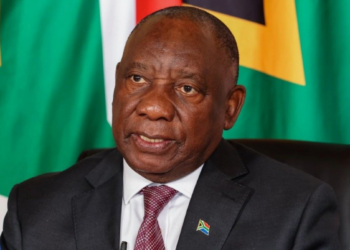







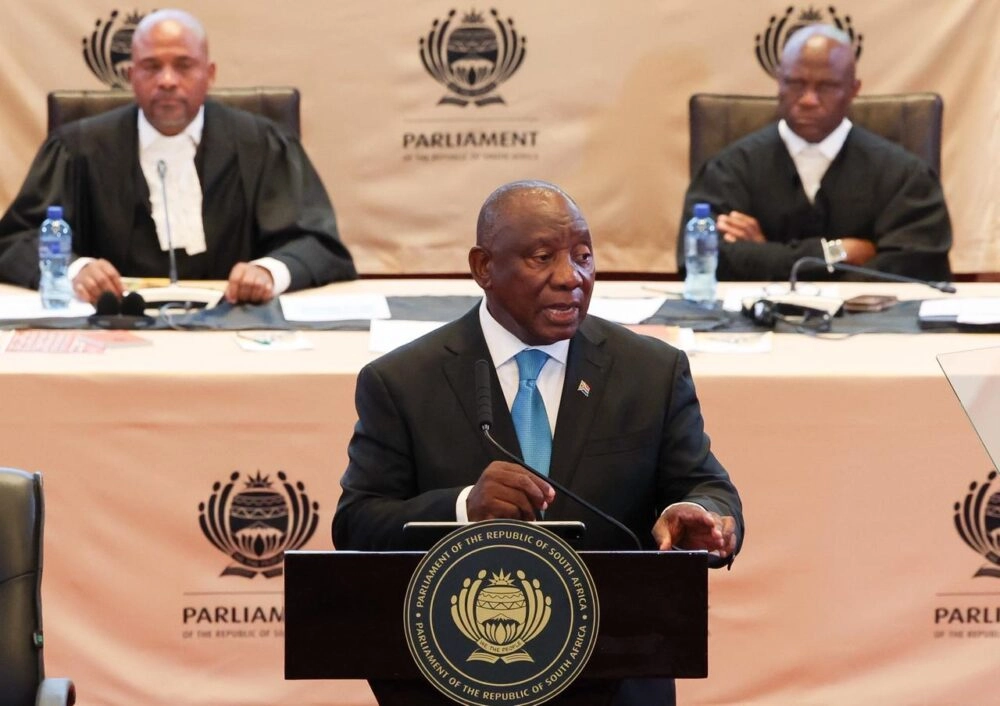
President Cyril Ramaphosa has issued a warning to South African employers who hire foreign nationals without the required visas, saying they will “face the full might of the law”. The warning was delivered during the 2026 State of the Nation Address (SONA), where the President linked stronger workplace enforcement to broader efforts to address illegal immigration while insisting that the law must be applied within constitutional limits.
The President said government plans to tighten enforcement by increasing inspection capacity and coordinating action across departments. He also cautioned against violence directed at foreign nationals, stressing that unlawful conduct will not be tolerated.
What the President said in SONA
In the address, Ramaphosa described illegal immigration as a risk to “security, stability and economic progress” and said government would act “in a firm and consistent manner”, while remaining guided by the Constitution and South Africa’s international obligations.
Central to the message to employers was a direct warning: businesses that hire foreign nationals without proper work authorisation will be targeted for enforcement. The President said government will hire an additional 10,000 labour inspectors this year to strengthen workplace compliance checks, and that enforcement will be carried out through coordinated operations involving the Department of Home Affairs, the South African Police Service (SAPS) and labour inspectors.
At the same time, Ramaphosa said government will not tolerate violence or lawlessness directed at foreign nationals, reinforcing that law enforcement must address violations without encouraging vigilantism or discrimination.
Why this warning matters for business owners
For employers, the statement signals a sharper compliance environment in 2026: more inspectors, more joint operations, and a higher likelihood of workplace visits—especially in sectors and areas where authorities believe non-compliance is concentrated.
The risk is not only reputational. Workplace enforcement can disrupt operations, trigger fines or criminal processes, and expose broader labour-law non-compliance during inspections. When inspectors arrive, checks often go beyond immigration status and can include minimum wage compliance, UIF registration, COID coverage, basic conditions of employment, and occupational health and safety requirements.
The President’s message also comes amid elevated public pressure around immigration, job scarcity and local economic stress. That increases scrutiny on businesses seen to be cutting costs through unlawful employment practices—particularly where allegations of exploitation arise.
What South African law requires from employers
South Africa’s Immigration Act places explicit duties on employers regarding foreign nationals they hire.
Key legal requirements include:
- Employers may not employ an “illegal foreigner”, a foreigner whose status does not authorise employment by that employer, or a foreigner working in terms or a capacity different from what their status allows.
- Employers must make a “good faith effort” to ensure they are not employing an illegal foreigner and must take steps to ascertain the status or citizenship of people they employ.
- Employers must keep prescribed records for two years after termination of a foreign national’s employment, and must report termination and any breach of status to the Director-General.
- The law also creates presumptions that can shift risk onto employers in certain circumstances, including where an illegal foreigner is found on business premises.
The Act also sets out penalties for knowingly employing an illegal foreigner or employing a foreigner in violation of the Act. These penalties can include fines and imprisonment, with increased jail exposure for repeat convictions.
Signs enforcement is already escalating
Government’s compliance messaging is not only rhetorical. Recent official updates from the Department of Employment and Labour describe joint workplace operations that resulted in arrests and sanctions.
In Rustenburg, the department said eleven undocumented foreign nationals and six employers were arrested during a labour compliance blitz targeting wholesale and retail establishments. The department stated that the arrested employers were each fined R15,000 for contravening the Immigration Act, and warned employers against hiring undocumented workers, describing exploitation as a driver of unlawful hiring.
In Newcastle’s industrial textile and clothing sector, the department reported that a joint inter-departmental inspection blitz led to the arrest of two employers for hiring 34 foreign nationals working without valid documents. The statement also noted that inspectors issued prohibition notices and identified multiple areas of labour-law non-compliance, including workplace safety and statutory registration obligations.
These examples indicate that inspections may involve multi-agency teams and that immigration checks can trigger broader labour compliance enforcement, particularly where inspectors find unsafe conditions or failures to comply with UIF, COID and related statutes.
What businesses can do now to reduce risk
Employers that rely on foreign labour—whether directly or via labour brokers and contractors—may consider tightening internal controls before inspections increase.
Practical compliance steps include:
- Document verification and recordkeeping
- Ensure every foreign national employed has valid documentation authorising the specific work and role.
- Keep copies and maintain secure records, including for the statutory post-employment retention period.
- Role-to-visa matching
- Confirm that job titles, duties and work locations align with what the person’s status authorises.
- Contractor and labour-broker controls
- Where staffing is outsourced, require documentary proof and written undertakings of compliance, and conduct periodic audits.
- Manager training
- Train supervisors and HR teams on what documentation must be checked and what to do when documentation expires or changes.
- Inspection readiness
- Prepare a compliance file (UIF, COID, wages, hours, contracts, OHS documentation), since immigration checks can expand into broader labour enforcement.
Policy direction: quotas and tighter labour-market controls
Alongside enforcement, government has indicated support for policy instruments that regulate foreign employment by sector. The Employment Services Amendment Bill draft published for comment includes provisions that would allow the Minister to set maximum quotas for the employment of foreign nationals in any sector, by notice in the Government Gazette, following consultation and a public comment process.
While legislative processes can change content and timelines, the policy direction reinforces what employers heard in SONA: the state wants stronger oversight of foreign employment, backed by inspections and enforcement capacity.
What happens next
The President’s commitment to recruit 10,000 additional labour inspectors suggests 2026 could see a measurable increase in workplace visits, particularly in higher-risk sectors and areas where enforcement agencies have already conducted multi-department operations.
For business owners, the key takeaway is that immigration compliance is no longer a narrow paperwork issue. It is becoming a frontline enforcement area tied to labour standards, border management and public safety—meaning audits, recordkeeping and workforce verification will likely become more frequent and more consequential.