







What we know so far
South Africa has processed 53,449 foreign nationals for deportation and repatriation as of the close of business on July 11, 2026, the government said at a media briefing on Sunday.
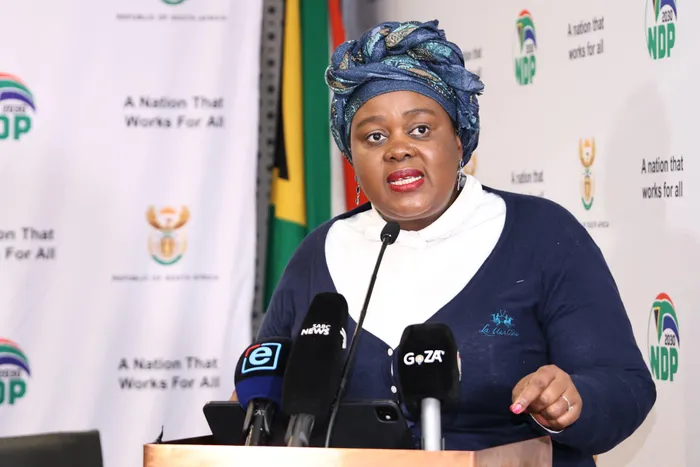
Justice and Constitutional Development Minister Mmamoloko Kubayi, who chairs the Inter-Ministerial Committee (IMC) on Migration, gave the figure while briefing media in Pretoria, according to a statement published by the Government Communication and Information System’s SAnews service. She said the total was “dominated by Malawians, followed by Zimbabweans and Mozambicans,” with Malawian nationals accounting for more than 80% of the total, according to IOL’s report on the same briefing.
Kubayi drew a legal distinction between the two categories captured in that figure. Repatriation is a voluntary return to a person’s country of origin, governed by international law including the 1951 UN Convention; government began assisting with bus transport for Malawian repatriations after Malawi experienced funding shortages from June 14. Deportation is a formal legal process under Section 34 of the Immigration Act, used to expel non-citizens who have contravened South African law.
The update forms part of the government’s implementation of President Cyril Ramaphosa’s five-point plan on migration management, announced on June 7, which focuses on enforcing immigration law, securing borders, streamlining the immigration system, closing policy gaps and strengthening cooperation with neighbouring countries. It follows weeks of anti-illegal immigration protests across several provinces, after anti-migration groups issued a public ultimatum demanding undocumented migrants leave the country by June 30.
Why it matters
The surge in deportations and repatriations has coincided with a documented rise in anti-migrant violence, and the government and the medical humanitarian organisation Médecins Sans Frontières (MSF) are presenting different pictures of how displaced people are faring as a result.
Kubayi told the briefing that government had “noted some concerns from various quarters regarding the humanitarian situation, especially at the Musina Temporary Repatriation Centre,” but said conditions there met the state’s constitutional obligations. “We can confirm that this temporary transit arrangement does provide appropriate shelter, water, sanitation, food, dignity packs, security, child protection and coordinated transport support where required,” she said.
MSF, which has launched an emergency medical response across Gauteng, KwaZulu-Natal, the Western Cape and the South Africa-Zimbabwe border, described a different situation. The organisation said it is “urgently scaling up operations to respond to the medical needs of people gathered close to the border” at Musina, and that people had sought refuge in parks, churches and foreign consulates after the anti-migration ultimatum. “It’s not over; we are very concerned that this situation is escalating into a humanitarian crisis,” said Claire Waterhouse, MSF’s emergency coordinator.
MSF said that although organisers of the anti-migrant campaign said they were targeting undocumented migrants, many of its patients were refugees, asylum seekers and documented migrants who had also reported threats, intimidation and violence. MSF nurse Phumla Tsotetsi said the organisation was particularly concerned about interrupted treatment for people with chronic conditions such as diabetes, hypertension, HIV and TB, as well as the needs of young children, pregnant women and survivors of violence, including women recovering from recent Caesarean sections.
Separately, Kubayi warned against private citizen groups conducting unauthorised searches of homes and businesses suspected of housing undocumented migrants, calling such searches illegal. “No individual or group has the authority to take the law into their own hands or to intimidate, threaten, or unlawfully remove any person from any community,” she said, adding that law enforcement “will not hesitate to act” against those who continue such conduct.
Key details and figures
According to Kubayi’s briefing, standard immigration deportations continued alongside the assisted repatriation programme. In June 2026, a total of 4,898 people were deported: 1,929 to Malawi, 1,384 to Zimbabwe, 1,200 to Mozambique and 342 to Lesotho. Between June 14 and July 8, a further 2,801 were deported: 910 to Malawi, 903 to Zimbabwe, 755 to Mozambique and 187 to Lesotho. IOL additionally reported that 15,398 deportations took place between April 1 and June 30, supported by 2,519 joint law enforcement operations, and that 2,615 people were repatriated to countries outside the Southern African Development Community, including 1,159 to Nigeria, 939 to Uganda, 431 to Kenya and 86 to the Republic of Congo.
To speed up deportation case processing, Kubayi said dedicated immigration courts had been established at Sherwood in KwaZulu-Natal, with seven courts operating in eThekwini alongside a virtual court linked to Sherwood. Between June 1 and July 9, KwaZulu-Natal courts finalised 2,640 immigration cases, with the eThekwini courts accounting for 2,173 of those. A court is also being re-established at the Lindela Repatriation Centre, expected within a month, and a further immigration court is planned at an airport, using space made available by the Airports Company South Africa, expected to be operational within three months.
On enforcement against vigilantism, Kubayi said law enforcement had, as of July 8, registered 205 cases and arrested 350 people for migration-related unlawful conduct, intimidation and incitement, with 69 cases under active investigation and 112 already before the courts.
Kubayi also confirmed that Mkhanyisi Ndodana Tshuma, wanted by British authorities in connection with the alleged murder of his wife and two children, would be extradited to the United Kingdom once she signs the formal request. Tshuma arrived at OR Tambo International Airport from Britain on July 5 without having been flagged by UK authorities, and was arrested in Kensington, Johannesburg, after South African police received an Interpol alert.
What happens next
The government has not indicated when its intensified deportation and repatriation drive will end, and Kubayi’s briefing framed it as an ongoing implementation of Ramaphosa’s five-point migration plan rather than a time-limited operation. The additional immigration courts planned for Lindela and at an unnamed airport are expected to become operational within one and three months respectively, which would further increase the pace of deportation case processing.
MSF has not indicated when it expects to scale down its emergency response, and described the humanitarian situation around Musina and other affected areas as still escalating rather than stabilising. It remains unclear whether government plans any specific additional measures beyond its existing assurances to address MSF’s concerns about healthcare access, shelter and medication for those displaced by the unrest, or how the 205 registered vigilantism cases will be resolved through the courts.