


What we know so far
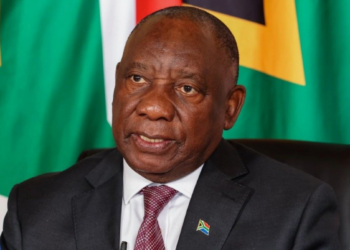
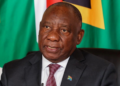
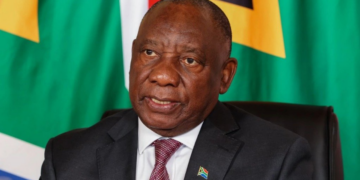
President Cyril Ramaphosa has announced that South Africa will raise its financial contribution to the continental Ebola response to US$13.5 million.
He made the announcement on Tuesday, 16 June, during a High-Level Virtual Meeting of Heads of State, Government and Partners on the Ebola outbreak.
Ramaphosa spoke in his capacity as the African Union Champion for Pandemic Preparedness, Prevention and Response. The meeting was convened by Burundi’s President and current African Union Chairperson, Evariste Ndayishimiye.
The gathering was aimed at mobilising African and international support to contain the Ebola outbreak caused by the Bundibugyo virus strain in the Democratic Republic of the Congo and Uganda, while strengthening preparedness in countries at risk of regional spread.
The new figure marks a sharp escalation in South Africa’s commitment. The country pledged an initial US$2.5 million in May, then raised it to US$5 million later that month, before the latest increase to US$13.5 million.
Ramaphosa used the platform to press other leaders to maintain or increase their pledges, and urged those who made earlier commitments to convert them in full into cash, medical countermeasures or technical assistance.
Why it matters
The outbreak is one of the most serious public health emergencies on the continent, and the absence of medical tools makes containment urgent.
There is no licensed vaccine or approved antiviral for the Bundibugyo strain, a point Ramaphosa underscored in his remarks. He warned that every day transmission continues unchecked, the human cost rises.
He drew a direct comparison to the West Africa Ebola epidemic, noting that delayed action then turned a localised outbreak into a regional and global crisis.
For South Africa, the response carries both humanitarian and security weight. The affected areas sit on busy cross-border trade and travel routes, raising the risk of wider regional transmission.
The financial commitment also reinforces a broader argument Ramaphosa has made about African self-reliance in health emergencies. He stressed that the continent cannot depend indefinitely on external markets and production systems.
Key details and figures
South Africa’s contribution channels support through the African Union and Africa Centres for Disease Control and Prevention structures coordinating the continental response.
The World Health Organization declared the outbreak a public health emergency of international concern in May. The DRC Ministry of Health confirmed the country’s 17th Ebola outbreak on 15 May, caused by the Bundibugyo virus.
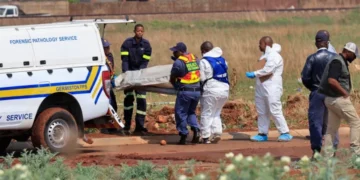
According to the WHO and the European Centre for Disease Prevention and Control, the DRC reported 782 confirmed cases and 181 confirmed related deaths as of mid-June, with Ituri province the most affected. Cases have also been confirmed across the border in Uganda.
Historical outbreaks of the Bundibugyo strain have carried case fatality rates of roughly 25% to 50%, according to the CDC.
African leaders have aligned behind a continental preparedness and response plan requiring at least US$319 million for the period from June to November 2026. The plan is intended to support outbreak control in affected countries and strengthen readiness in high-risk member states.
Ramaphosa noted that African countries have already committed initial domestic contributions representing roughly 10% of the required financing.
What happens next
The immediate focus is on translating pledges into deployable resources and breaking the chain of transmission at its source.
Ramaphosa called on leaders to help create safe corridors for the passage of goods and services, and urged a ceasefire to allow the Ebola response to proceed unhindered in a volatile operating environment.
He also called for expanded rapid diagnostic testing, contact tracing and community awareness, alongside stronger cross-border collaboration.
Looking beyond the current emergency, the President pushed for longer-term continental investment. He urged leaders to accelerate local manufacturing, strengthen the African Medicines Agency, and operationalise the African Pooled Procurement Mechanism.
Ramaphosa appealed to African financial institutions, development banks, philanthropies and the private sector to join governments in the effort, and called on international partners to continue standing with Africa.
Key uncertainties remain, including how quickly pledged funds will be validated and disbursed, whether a ceasefire can be secured in affected zones, and how fast the outbreak can be brought under control while no vaccine or antiviral exists for the strain.