



What we know so far
Eskom has confirmed four Koeberg radiation contamination events at Unit 2 of the Koeberg Nuclear Power Station between 30 June and 16 July 2026, and the National Nuclear Regulator says its investigation is still open.
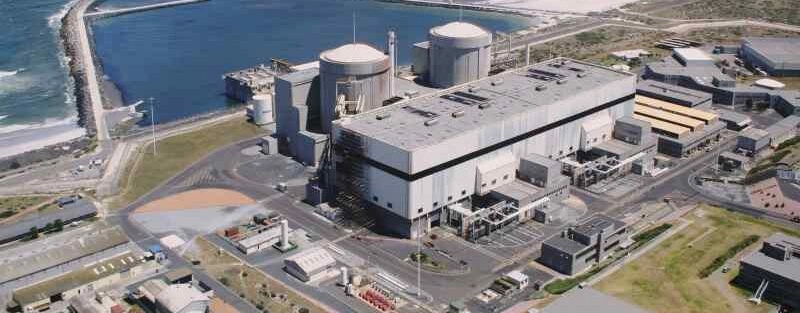
Koeberg sits about 40km north of Cape Town. Its two reactors generate 1,854MW and supply roughly 5% of South Africa’s electricity.
Officials say no radioactive material escaped the reactor containment building during any of the events, and that surrounding communities were never at risk.
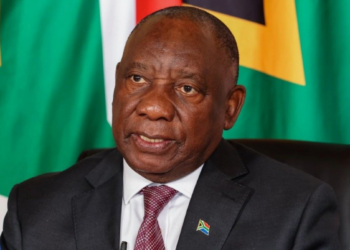
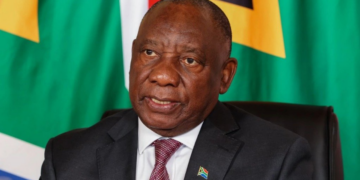
The events became a public matter after a media briefing convened on Sunday, 19 July, by Electricity and Energy Minister Kgosientsho Ramokgopa, alongside Eskom, the National Nuclear Regulator and the South African Nuclear Energy Corporation.
That briefing followed a News24 report published on 18 July alleging that around 150 Eskom employees and contractors were believed to have suffered internal radioactive contamination, with some reportedly requiring iodine treatment.
Eskom has rejected that account. In a media statement issued on 19 July, the utility said no iodine tablets needed to be administered to employees.
Eskom classified the event as Level 0, No Safety Significance, on the International Nuclear and Radiological Event Scale. That is the lowest rating the scale carries.
The utility said there was at no stage any release of radioactive material “beyond the containment structures”.
Unit 2 has been on a planned maintenance outage since April 2026. Unit 1 remains in full operation.
What the Koeberg radiation contamination means for Cape Town residents
For households in Melkbosstrand, Duynefontein, Table View and the wider Cape Town area, the operator and the regulator give the same answer. No radioactive material left the containment building and no environmental release was recorded.
What the events do raise is a question about maintenance controls at a plant the regulator cleared last year to run for another two decades.
In November 2025 the National Nuclear Regulator approved a 20-year operating licence extension for Koeberg, allowing operation until November 2045.
The Southern African Faith Communities’ Environment Institute has now asked the regulator to account for that decision in light of the July events.
SAFCEI director Francesca de Gasparis said the parties must “very seriously look at their compliance and at their safety regulations”, and give the public more detail on when Unit 2 will be considered safe and compliant.
Ramokgopa used the briefing to reaffirm that government’s nuclear expansion plans will proceed, including an additional 5.2GW of nuclear capacity targeted by 2039.
“I want to say to the country we are safe,” the minister said.
Key details and figures
The regulator’s account and Eskom’s written statement differ on how the events are counted, and that difference is worth setting out plainly.
The National Nuclear Regulator identified three contamination events, on 30 June, 2 July and 7 July. Eskom’s 19 July statement describes two brief and localised airborne radioactivity detections, on 2 and 7 July only.
Eskom chief nuclear officer Velaphi Ntuli told the briefing that the events were not all cases of airborne contamination and had to be distinguished from one another.
A fourth event, on 16 July, was confirmed at the briefing. Eskom attributes it to a power outage affecting ventilation units serving temporary maintenance tents inside the reactor building.
The earlier detections arose during eddy current testing, a non-destructive inspection technique that measures the wall thickness of steam generator tubes to detect thinning before it affects safety.
Eskom says robotic probes moving through the tubes disturbed microscopic oxide particles, known in the industry as crud, which became airborne inside the enclosed work area.
Radiation doses as presented by Velaphi Ntuli at the 19 July briefing:
| Measure | Figure |
|---|---|
| Maximum dose recorded across the events | 20 microsieverts |
| Annual occupational limit, Koeberg radiation worker | 20,000 microsieverts |
| Typical chest X-ray | about 100 microsieverts |
| Typical mammogram | about 400 microsieverts |
| Estimated annual dose from ordinary daily activities | about 2,400 microsieverts |
Ntuli also said that of 31 workers directly affected during the 2 July event, 20 recorded zero exposure.
On the iodine question, he said reactor fuel had been removed from the containment building and stored in the fuel building before maintenance began, which meant potassium iodide tablets were not necessary. Potassium iodide protects against radioactive iodine, which is associated with fuel damage.
Eskom set out the controls that were in place: physical containment barriers around the work area, high-efficiency particulate air filtered ventilation operating under negative pressure, and constant air monitors.
According to the utility, the monitors detected the increase and triggered an automatic alarm. Inspection work was stopped, the area was secured, ventilation was allowed to clear the airborne particles, and radiological assessments were completed before work resumed.
What happens next
The National Nuclear Regulator’s regulatory investigation and verification process remains active. No completion date has been placed on the public record.
The regulator has not indicated whether the July events will affect any conditions attached to Unit 2’s operating licence.
Eskom says the outage remains on schedule for completion in November 2026 and that the events did not affect the planned return to service.
SAFCEI has asked for a public account of when Unit 2 will be certified safe and compliant. No date has been provided.
Government’s nuclear procurement programme continues in parallel, with Ramokgopa confirming at the briefing that the build programme will not be paused.
The News24 allegation concerning approximately 150 workers and iodine treatment has not been confirmed by either the regulator or the operator, and Eskom has denied that iodine was administered. That allegation remains unresolved on the public record pending the outcome of the regulator’s investigation.