







Now I have sufficient sourcing. Let me build the article from the primary sources.
ARTICLE PACKAGE
Title: Hantavirus Confirmed in SA as Cruise Ship Deaths Rise to Three
Subheading: A British national is in critical condition in a Sandton hospital after testing positive for the rare rodent-borne virus, while a Dutch woman died at a Kempton Park facility after collapsing at OR Tambo.
Byline: Southafriworld Staff Reporter
Author bio: Southafriworld’s staff reporting desk covers breaking health, safety, and public interest developments across South Africa.
ARTICLE BODY
What we know so far
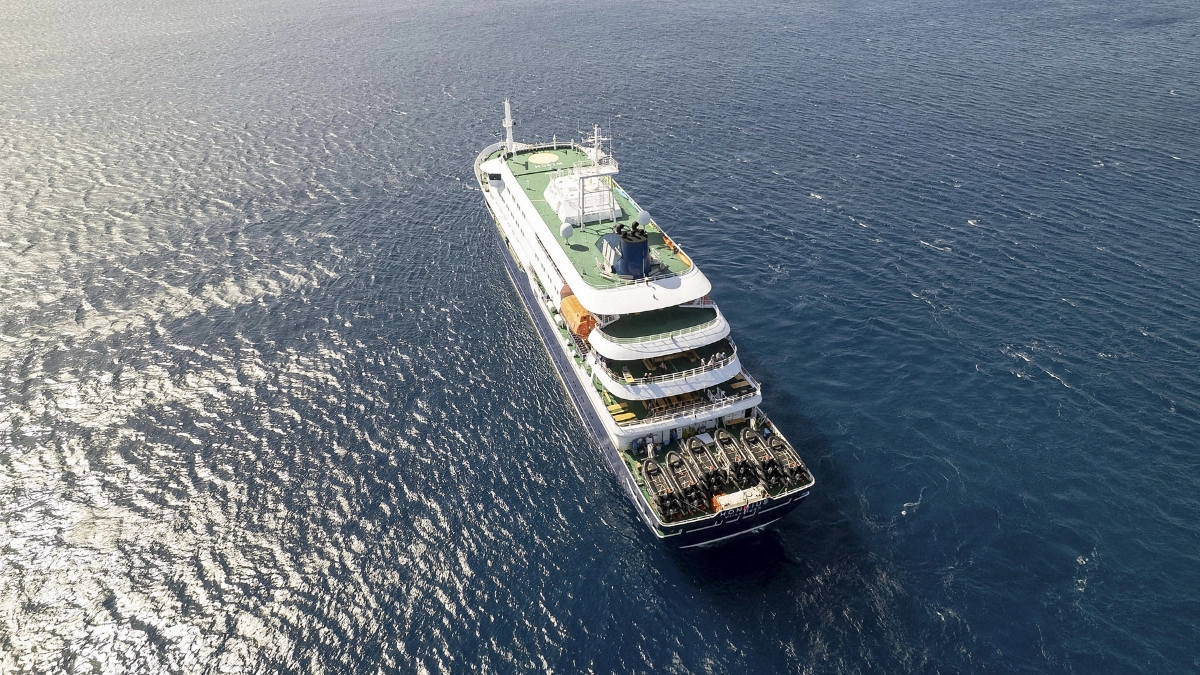
South Africa’s Department of Health has confirmed a rare case of hantavirus in a critically ill British national who was medically evacuated to a private hospital in Sandton, Gauteng. The confirmation, issued on 4 May 2026, makes this the only laboratory-verified hantavirus case linked to a suspected outbreak aboard the MV Hondius, a Dutch-flagged polar cruise ship operated by Oceanwide Expeditions.
The patient, whose identity has not been disclosed, was a passenger on the vessel. He fell ill on 27 April after the ship departed the British overseas territory of Saint Helena, according to Oceanwide Expeditions. Medical treatment administered on Ascension Island failed to stabilise his condition, prompting an emergency airlift to Sandton.
The Department of Health stated that his laboratory results returned positive for hantavirus, which it described as a rare but potentially deadly virus transmitted primarily by rodents. The patient remains in a critical condition in isolation, receiving ongoing medical attention.
The World Health Organization confirmed on 4 May that three people aboard the MV Hondius have died and that six individuals in total have shown symptoms. Of those six, only the British national in Sandton has a confirmed hantavirus diagnosis. The remaining five are classified as suspected cases. Investigations, including further laboratory testing, sequencing, and epidemiological work, remain ongoing.
Why it matters
The outbreak has triggered a multi-country public health response spanning South Africa, Cape Verde, the Netherlands, and the United Kingdom, coordinated by the WHO under international health regulations. For South Africa specifically, the immediate concern is limited but real: two passengers from the ship entered South African territory, and one of them died here.
The Department of Health stated that a 69-year-old Dutch woman, the wife of the first passenger to die, collapsed at OR Tambo International Airport while trying to board a connecting flight to the Netherlands. She was transported to a health facility near Kempton Park, where she died. Her laboratory results had not been finalised at the time of the department’s statement.
The department said it is working with the National Institute for Communicable Diseases and the Gauteng Department of Health to conduct contact tracing aimed at identifying and monitoring anyone who may have been exposed to the two patients who entered South Africa. Department spokesperson Foster Mohale stated that the main challenge is locating individuals who came into contact with the two patients and urged those people to come forward for screening and testing.
The department sought to reassure the public, stating that only two patients from the cruise ship had been within South African borders and that there was no reason to panic. The WHO echoed this position. Dr Hans Henri P. Kluge, the WHO’s Regional Director for Europe, stated on 5 May that the risk to the wider public remains low and that there is no need for panic or travel restrictions.
Key details and figures
The MV Hondius departed Ushuaia, Argentina, in early April with approximately 150 passengers on a voyage intended to reach the Canary Islands. The itinerary included stops at mainland Antarctica, the Falkland Islands, South Georgia, Nightingale Island, Tristan da Cunha, Saint Helena, and Ascension Island.
According to the Department of Health, the first passenger to fall critically ill was a 70-year-old Dutch man who developed fever, headache, abdominal pain, and diarrhoea while the ship was en route from Ushuaia to Saint Helena. He died, and his body was removed at Saint Helena, where it remains awaiting repatriation to the Netherlands.
His 69-year-old wife, the second affected passenger, subsequently collapsed at OR Tambo and died at a Kempton Park health facility. Her cause of death has not been officially confirmed pending laboratory results.
A third death, that of a German national, occurred on board the ship on 2 May, according to Oceanwide Expeditions. The cause has not been established.
Two crew members, one British and one Dutch, are currently experiencing acute respiratory symptoms on board and require urgent medical care, Oceanwide Expeditions confirmed. Hantavirus has not been confirmed in either case.
As of 5 May, 149 people from 23 countries, including 17 American nationals, remain on the ship. Cape Verde has refused to allow the vessel to dock at Praia, its capital, as a precautionary measure. Cape Verde’s Health Minister Maria da Luz Lima confirmed that local health officials had boarded the ship to assess symptomatic individuals but had not authorised disembarkation. Oceanwide Expeditions indicated the ship may proceed to Las Palmas or Tenerife in the Canary Islands.
Hantaviruses are a family of viruses found worldwide, transmitted primarily through contact with the urine, droppings, or saliva of infected rodents. According to the United States Centers for Disease Control and Prevention, human infection typically occurs through inhalation of aerosolised particles from rodent waste. Person-to-person transmission is rare, although one strain, the Andes virus, found primarily in Chile and Argentina, has shown limited capacity for human-to-human spread. There is no specific treatment or vaccine for hantavirus. Early supportive medical care can improve survival rates.
The source of the infection aboard the MV Hondius has not been determined. Investigators are considering whether rodent contamination on the vessel or exposure during a port visit may be responsible, though no conclusions have been reached.
What happens next
The WHO stated it is facilitating coordination between member states and the ship’s operator for the medical evacuation of the two symptomatic crew members, as well as a full public health risk assessment for those remaining on board. Dutch authorities have agreed to assist with repatriation of affected individuals and the remains of one of the deceased, according to Oceanwide Expeditions.
In South Africa, the NICD-led contact tracing operation in Gauteng is ongoing. The department has urged anyone who may have come into contact with either the patient in Sandton or the woman who collapsed at OR Tambo to present themselves for screening. The results of laboratory testing on the deceased Dutch woman and the German national are pending and will be critical in establishing whether their deaths are connected to hantavirus.
Virus sequencing is underway to identify the specific strain involved, which will help clarify the transmission pathway. If the Andes virus is identified, it would raise questions about potential human-to-human spread, a development that infectious disease specialists have flagged as significant for travel medicine.
The ship’s 149 remaining passengers and crew are subject to isolation, hygiene protocols, and medical monitoring. No timeline has been confirmed for their disembarkation. The WHO has notified global health authorities under international regulations and continues to support the response.