







What we know so far
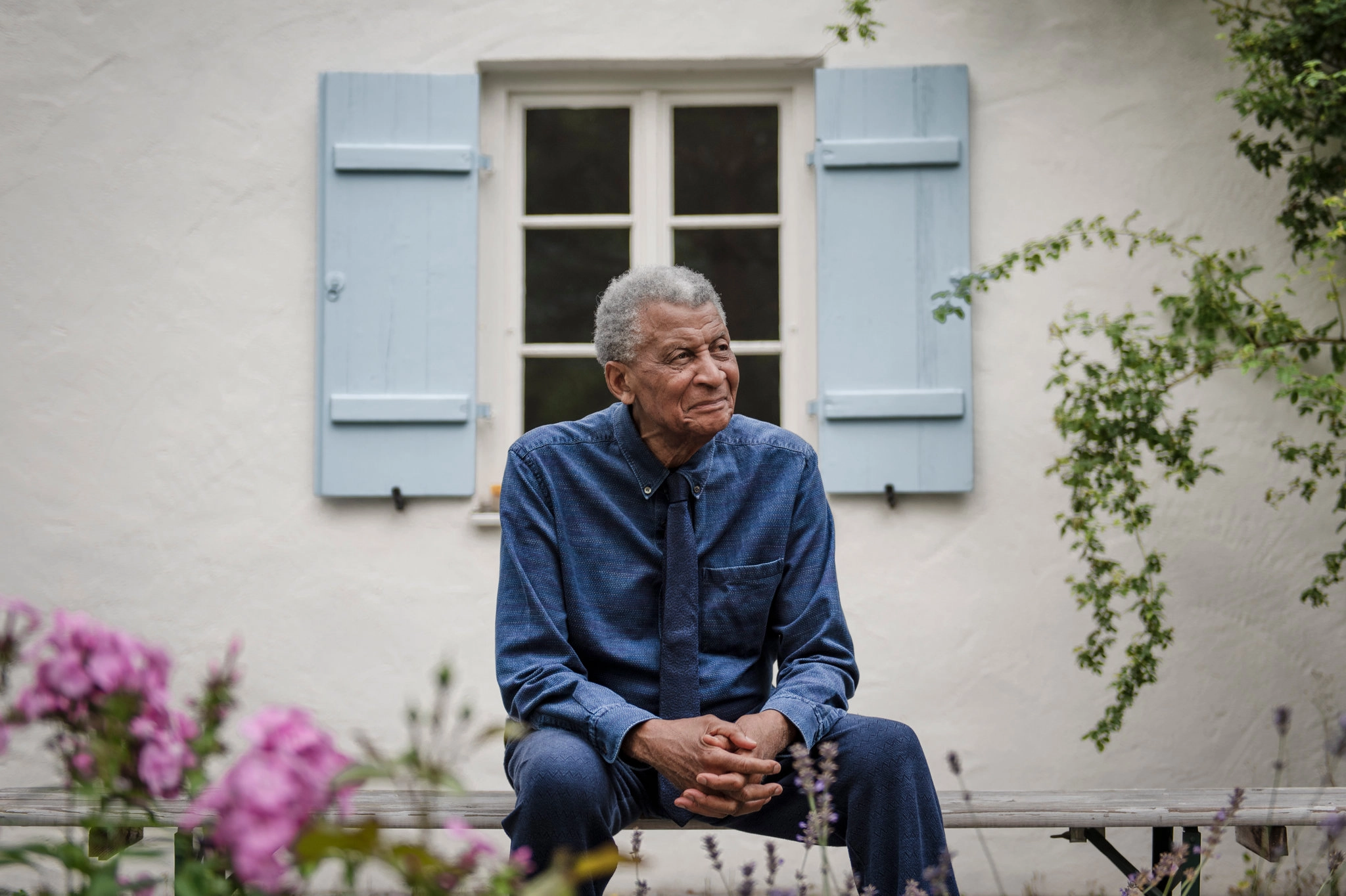
Abdullah Ibrahim, the South African pianist, composer, and global jazz icon whose music carried the sound of Cape Town’s streets and the weight of its history to stages around the world, died on Monday, 15 June 2026. He was 91 years old.
His family confirmed the news in a media statement, saying: “It is with profound sadness that the family of legendary South African pianist, composer and global jazz icon Abdullah Ibrahim announces his passing at the age of 91.” His partner, Dr Marina Umari, said that Ibrahim passed away with South Africa and its people in his heart, and that his love for his country never wavered, no matter where in the world he found himself.
According to the family, Ibrahim’s burial will take place in Germany’s Bavaria region, the area where he had made his home in his later years. His final performance was at the Cape Town International Jazz Festival in March this year.
South Africa has lost the musician Nelson Mandela once called “our Mozart.” A career of more than seven decades, a catalogue believed to exceed 300 albums, and a body of work that stretched from the Cape Flats to Carnegie Hall comes to a close with his death.
Why it matters
Ibrahim was not simply a musician. He was a cultural institution, a political act, and a living archive of what South African jazz could be and what it cost to play it freely.
Born in Kensington, Cape Town, on 9 October 1934, he was baptised Adolf Johannes Brand in the same year the then Union of South Africa declared itself a sovereign independent state. He began piano lessons at the age of seven, taught by his grandmother Margaret, who was the pianist at the AME Church in Kensington. His mother Rachel led the choir. By the age of 15 he was performing professionally, first as a vocalist and then on piano with big bands including the Tuxedo Slickers and the Willie Max Orchestra.
He was exposed from childhood to a remarkable range of musical traditions, including African Khoi-San songs, gospel, Cape Carnival or Klopse music, American jazz, township jive, Cape Malay music, and classical music. He attended Trafalgar High School in the heart of District Six, the mixed-race suburb that would be demolished under the Group Areas Act, and whose erasure would later echo through his music.
When he was refused admission to the University of Cape Town’s College of Music because of his race, he taught himself, reading every music book in the local public library and listening to jazz records brought by American soldiers passing through Cape Town. That self-education gave him the nickname that would follow him through his early career: Dollar Brand.
Key details and figures
By the late 1950s, Ibrahim was playing alongside Kippie Moeketsi, Hugh Masekela, and Jonas Gwangwa in the Jazz Epistles, the group behind the first full-length jazz LP recorded by black South African musicians. The recording was an act of defiance the apartheid state would not forgive.
He left South Africa for Europe in 1962, and it was in a Zürich club in 1963 that his wife-to-be, singer Sathima Bea Benjamin, persuaded Duke Ellington to come and hear him play. The encounter led to a recording session with Reprise Records and a friendship with Ellington that shaped the rest of his career. By 1965, Ibrahim and his trio were in New York, performing at the Newport Jazz Festival and Carnegie Hall. A year later, he was called upon to lead the Ellington Orchestra as substitute. In 1967, a Rockefeller Foundation grant brought him to the Juilliard School of Music.
In 1968, he returned to Cape Town, converted to Islam, and took the name Abdullah Ibrahim. That transformation was not only spiritual; it marked a shift in how he understood his music’s relationship to his community and his country.
In June 1974, he recorded Mannenberg, cut in a single take of collective improvisation with saxophonists Basil Coetzee and Robbie Jansen. The track, born from the township where so many families displaced from District Six had been resettled, became the unofficial anthem of the liberation movement. Ibrahim had said that copies of the composition were smuggled into Robben Island by Mandela’s lawyer, and that when Mandela heard it, he declared that liberation was near.
After the Soweto student uprising in 1976, Ibrahim organised an illegal benefit concert for the African National Congress. He and his family then returned to New York, where he performed at the 1988 Central Park concert marking Nelson Mandela’s 70th birthday.
After Mandela’s release from prison in 1990, Ibrahim returned to South Africa, and in 1994 he performed at Mandela’s inauguration as president. He went on to found the M7 academy for young South African musicians in 1999 and launched the Cape Town Jazz Orchestra in 2006.
His honours include the Order of Ikhamanga, an honorary doctorate from the University of the Witwatersrand, the South African Music Lifetime Achievement Award, and a 2019 NEA Jazz Masters Fellowship in Washington DC. His film scores include the award-winning Chocolat. His recorded catalogue is believed to exceed 300 albums.
What happens next
Tributes were flowing from across the arts world and beyond on Monday evening as news of Ibrahim’s death spread. Close family friend Dr Iqbal Survé, paying tribute, said South Africa had lost more than a musical icon, and recalled that when he spoke to Ibrahim on Saturday evening, the musician was still in good spirits. “He was a fighter right to the end,” Survé said.
Ibrahim’s legacy, however, is not primarily a question of what comes next in terms of ceremony. It is embedded in the music itself, in the township streets and Cape Flats rhythms encoded in his compositions, in the generations of South African musicians he mentored through the M7 academy, and in the Cape Town Jazz Orchestra, which he built specifically to outlast his own career.
Mannenberg alone ensures that his voice will not fall silent. The 14-minute composition, recorded in a single session on Bloem Street in Cape Town more than half a century ago, remains one of the most performed and referenced pieces of music in South African history. Its status as the unwritten anthem of the anti-apartheid movement means it belongs not only to jazz audiences but to the country’s political and social consciousness.
His final public performance at the Cape Town International Jazz Festival in March 2026 was witnessed by audiences who now understand they were present for a last statement from one of the great figures of African musical history. He will be buried in Bavaria, Germany, in the town where he made his home, but the sounds he left behind are unmistakably and permanently South African.