





The US BEE demand at the centre of Bozell’s latest criticism
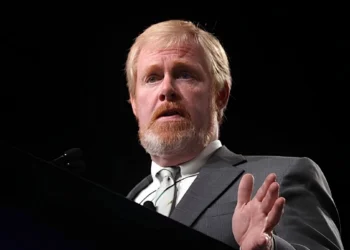
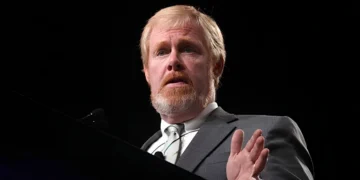
The US BEE demand that Ambassador Leo Brent Bozell III says is costing South Africa jobs is narrower than several published accounts of it, according to the text he released himself. It asks Pretoria to let telecommunications and mining companies meet empowerment ownership rules through equity-equivalent investment programmes, an option other sectors already have, instead of selling equity.
Bozell set out all five of Washington’s asks in an opinion piece on the US Embassy website on 29 September 2026, titled The Cost of Doing Nothing. He wrote that two had been settled for now and that the other three had gone unanswered by the government for nine months.
He has since pressed the mining case on Fox News, telling the channel “We can create hundreds of thousands of jobs”, according to Newsday. Pretoria disputes his account of its silence, and President Cyril Ramaphosa’s special adviser, Alistair Ruiters, has described the President’s 12 September letter to Trump as a reply “which was not a rejection and not a refusal”.
The row sharpened over the weekend when International Relations and Cooperation Minister Ronald Lamola told the Sunday Times that Bozell should “get out of the kitchen” if he was tired of dialogue. Bozell replied on X that he was being personally insulted, and Southafriworld reported the third demarche row earlier today.
The US BEE demand, word for word
The fifth ask calls for alternatives, such as equity equivalent investment programmes (EEIPs), to broad-based black economic empowerment ownership requirements. Bozell wrote that EEIPs are already open to every business sector except telecommunications and mining, and closed the ask with one line: “Allow them to participate too.”
An EEIP lets a multinational that cannot sell a stake in its local business invest in approved development programmes instead. It does not remove the empowerment requirement; it changes how a company meets it.
Earlier accounts described this ask more broadly. Several, including Southafriworld’s own reconstruction on 22 September, framed it as ending the 30% ownership requirement for US investors, and some listed a separate demand on non-alignment and Iran that does not appear in the embassy text.
Ruiters told Daily Maverick that foreign-policy disputes were moved to a separate list of eight geopolitical asks, to be negotiated only once the five domestic asks are resolved. That list has not been published.
| Ask, as published by the US Embassy | US position in the op-ed | Pretoria’s stated position |
|---|---|---|
| 1. Do not interfere with US processing of Afrikaner refugees | Done, barring setbacks | Addressed, Ruiters says |
| 2. Do not allow uncompensated land seizures | Done, pending the court review of the Expropriation Act | Before the courts, Ruiters says |
| 3. President and senior officials condemn the “Kill the Boer” chant | Outstanding | Ramaphosa signed the Hate Crimes and Hate Speech Act, Ruiters says |
| 4. Make rural crime a priority crime, with a funded plan | Outstanding | Rural safety strategy running at 893 of 900 identified police stations, Ruiters says |
| 5. Extend EEIPs to telecoms and mining | Outstanding | BEE review under way, starting with mining and telecoms, Ruiters says |
On the third ask, South African courts have found that the chant, in context, is not hate speech. The Constitutional Court refused AfriForum leave to appeal that finding in March 2025.
Telecoms: the minister agrees, the Act does not
In telecoms, the obstacle is the statute rather than the minister. ICASA said on 13 May 2026 that the Electronic Communications Act requires individual licence holders to be at least 30% owned by historically disadvantaged groups, and that fully recognising EEIPs would need Parliament to amend the Act.
That was the regulator’s response to a policy direction gazetted in December 2025 by Communications and Digital Technologies Minister Solly Malatsi, asking it to apply the ICT Sector Code, which recognises EEIPs, to licensing. In his budget vote on 12 May, Malatsi said the department would pursue amendments enabling EEIPs to “complement ownership requirements in telecommunications”.
The Electronic Communications Amendment Bill that Malatsi tabled on 22 April 2026 deals with spectrum, roaming and wholesale access, not ownership. Southafriworld found no separate ownership amendment published by 5 October.
The rule matters beyond diplomacy because it is the requirement SpaceX’s Starlink does not meet. Daily Maverick has reported that Starlink’s own EEIP offer was worth R500 million and promised to connect 5 000 schools, and where Starlink stands in South Africa still turns on the same change.
Mining: no route on the table, and no public answer
In mining, Southafriworld found no comparable process under way. The 2018 Mining Charter requires new mining rights to carry at least 30% black ownership, and only the 5% host-community portion may be met through an equity-equivalent benefit.
Bozell’s pitch, according to Newsday’s account of the Fox interview, is that US firms would build plants to process minerals such as iron ore in South Africa rather than ship raw ore abroad. The embassy op-ed names no company and puts no rand or dollar figure on the investment it says is waiting.
Ruiters said the BEE review Ramaphosa announced in his 2026 State of the Nation Address will start with mining and telecommunications, with findings due by the next address. Southafriworld found no public response to the mining ask from the department led by Mineral and Petroleum Resources Minister Gwede Mantashe.
What changes for South Africans while the asks stay open
The visa restrictions Secretary of State Marco Rubio announced on 15 September apply to people Washington deems responsible for the policies it objects to, not to South African travellers in general. No individual has been publicly named, and Southafriworld has tracked the visa restrictions and AGOA since the announcement.
The commercial base at stake is large. Bozell said in March that more than 500 American companies employ over 250 000 South Africans, and his op-ed calls the visa policy a first response rather than the last word.
Parliament’s Portfolio Committee on International Relations and Cooperation said on 2 October that it would call DIRCO to explain three demarches in under nine months. Its chairperson, Supra Mahumapelo, said: “We reaffirm South Africa’s commitment to international law, multilateralism and non-racialism.”
Several points remain unconfirmed. Ramaphosa’s letter to Trump has not been published, so neither government’s description of it can be checked, and the Fox interview was not reviewed directly for this article.
The next fixed points are concrete. Any EEIP change in telecoms needs an amendment to the Electronic Communications Act that has not yet been published, and the BEE review is due to report by the next State of the Nation Address, normally delivered in February.
HOW WE REPORTED THIS CROSS-CHECKED
- The primary document was the US Embassy opinion piece by Ambassador Leo Brent Bozell III published on 29 September 2026, which was read in full and sets out the five asks in his own words.
- The published list was compared against earlier accounts of the asks, including Southafriworld's own reconstruction of 22 September 2026, and the differences are set out in the article.
- The telecommunications position was checked against ICASA's statement of 13 May 2026 and the communications minister's budget vote speech of 12 May 2026, and the Parliament portfolio committee statement of 2 October 2026 was read in full.
- The South African government's account of each ask was taken from on-record remarks by the President's special adviser because Ramaphosa's letter to Trump has not been published, and the ambassador's television interview was not reviewed directly and is attributed.
- No comment was sought from the US Embassy, the Presidency, DIRCO or the ministries named before publication.
- This article was drafted with AI assistance and the facts, figures and quotations were checked against the primary source by the editor before publication.