




• About us
  • Advertise
  • Terms and Conditions
  • Editorial Policy
  • Privacy Policy
  • Contact
Southafriworld
  • Home
  • News
    • All
    • Business
    • Crime
    • Economy
    • Tech
    • Tourism
    New car sales in SA hit a 12-year high | Southafriworld

    New car sales hit 12-year high: what’s driving the boom

    Smart ID bank branch finder now live | Southafriworld

    New online tool shows where to get your smart ID at a bank

    Petrol price cut 52c, diesel up in August | Southafriworld

    Petrol drops 52c but diesel jumps R1.38 from Wednesday

    Southern Africa growth set to slow in 2026 | Southafriworld

    AfDB sees Southern Africa growth slowing to 2.1% in 2026

    Tshwane loses R155 million in grants | Southafriworld

    Tshwane loses R155 million meant for water and roads

    Minimum Wage South Africa 2026: R30.23 | Southafriworld

    Minimum wage South Africa 2026: hourly and monthly rates

    SARS Tax Season 2026: Key Deadlines | Southafriworld

    SARS tax season 2026: deadlines and how to file

    SASSA Grant Amounts 2026: Full List | Southafriworld

    SASSA grant amounts 2026: the full list and payment dates

    South Africa tourism arrivals up 12.3% in 2026 | Southafriworld

    SA tourism arrivals climb 12.3% to 5.5 million in 2026

    • Business
    • Crime
    • Economy
    • Tech
    • Tourism
  • About us
    • Masthead
    • Editorial Policy
    • Privacy Policy
    • Terms and Conditions
    • Corrections Policy
  • Advertise
  • Contact Us
No Result
View All Result
  • Home
  • News
    • All
    • Business
    • Crime
    • Economy
    • Tech
    • Tourism
    New car sales in SA hit a 12-year high | Southafriworld

    New car sales hit 12-year high: what’s driving the boom

    Smart ID bank branch finder now live | Southafriworld

    New online tool shows where to get your smart ID at a bank

    Petrol price cut 52c, diesel up in August | Southafriworld

    Petrol drops 52c but diesel jumps R1.38 from Wednesday

    Southern Africa growth set to slow in 2026 | Southafriworld

    AfDB sees Southern Africa growth slowing to 2.1% in 2026

    Tshwane loses R155 million in grants | Southafriworld

    Tshwane loses R155 million meant for water and roads

    Minimum Wage South Africa 2026: R30.23 | Southafriworld

    Minimum wage South Africa 2026: hourly and monthly rates

    SARS Tax Season 2026: Key Deadlines | Southafriworld

    SARS tax season 2026: deadlines and how to file

    SASSA Grant Amounts 2026: Full List | Southafriworld

    SASSA grant amounts 2026: the full list and payment dates

    South Africa tourism arrivals up 12.3% in 2026 | Southafriworld

    SA tourism arrivals climb 12.3% to 5.5 million in 2026

    • Business
    • Crime
    • Economy
    • Tech
    • Tourism
  • About us
    • Masthead
    • Editorial Policy
    • Privacy Policy
    • Terms and Conditions
    • Corrections Policy
  • Advertise
  • Contact Us
No Result
View All Result
Southafriworld
No Result
View All Result
Home News

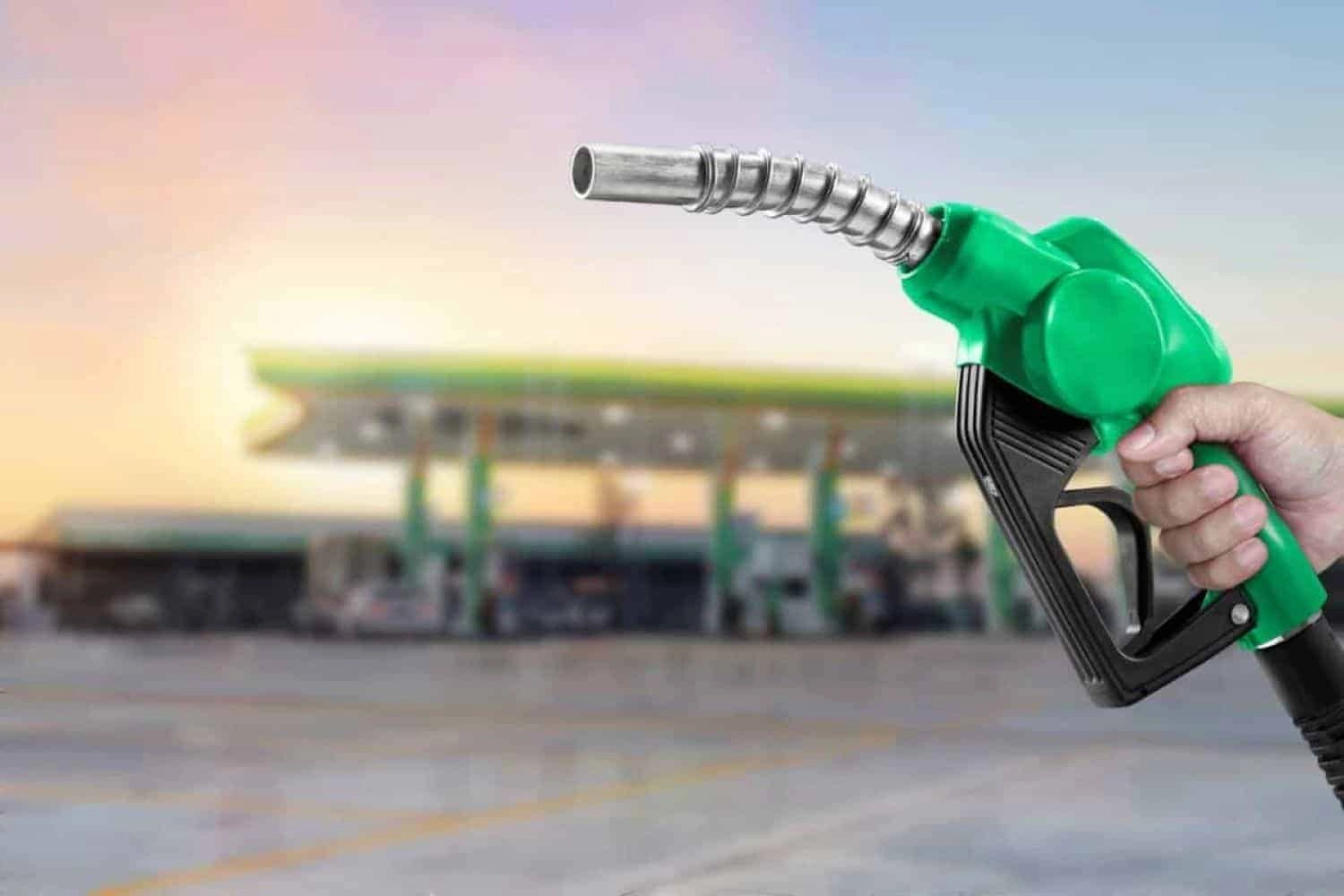
SA drafts rules for fuel rationing in future shortages

A new government gazette sets out four emergency trigger levels, including a Level 3 declaration that would allow petrol and diesel rationing, months after panic buying emptied pumps nationwide.

Ezra Labuschagne by Ezra Labuschagne
10 July 2026, 15:00
in News
SA drafts fuel rationing emergency rules | Southafriworld

What we know so far

The Department of Mineral and Petroleum Resources (DMPR) has published a draft Strategic Petroleum Stocks Policy for public consultation, setting out for the first time a formal, tiered system for declaring fuel shortage emergencies and rationing petrol and diesel in South Africa.

The draft policy was gazetted on July 9, 2026, in Government Gazette No. 54975, under Government Notice No. R. 7691. It proposes shifting South Africa from a voluntary fuel stockholding system to a mandatory one, compelling both the state and private fuel companies to hold minimum reserves that can be released during a declared crisis.

The department states in the policy document that it “directly addresses concerns and issues raised during the recent global oil shortage, which led to panic buying and anxiety over fuel shortages in the country.” That episode unfolded in March and April 2026, when a sharp fuel price increase, linked to global oil market pressure from the US-Iran conflict, drove petrol up by R5.26 a litre and diesel by R9.49 a litre. Roughly 140 petrol stations ran dry ahead of the increase, and some motorists in Cape Town and elsewhere faced informal purchase caps of around 35 litres, despite no official rationing policy being in place at the time.

Why it matters

South Africa has shifted in recent years from being a refiner of crude oil to a net importer of finished fuel products, after major domestic refineries such as SAPREF and Engen were closed or converted into import terminals. The draft policy states this has increased the country’s exposure to “immediate supply shocks” it is no longer equipped to absorb domestically.

The department estimates that a total, nationwide non-availability of liquid fuel would cost the South African economy approximately R1 billion a day in GDP, a figure it says has not changed since it was first used to justify strategic stockholding after a 2005 refined product supply disruption. The policy also models a more moderate scenario: a two-week disruption cutting fuel availability by 20% would cost an estimated R48 million in direct and indirect losses, equivalent to about 0.7% of GDP for that period, spread across transport and logistics, manufacturing, agriculture and retail.

The document further notes that South Africa currently has no mandatory stockholding obligation on private fuel companies, leaving the state as the “sole guarantor of supply during disruptions,” which it calls “a burden the State cannot carry alone especially given fiscal constraints.” Imported fuel currently takes between 21 and 42 days to reach South African ports, plus a further 10 to 14 days to be offloaded, refined and transported inland, a lag the policy says leaves the country dangerously exposed if a shock occurs.

Key details and figures

The draft policy sets out four escalating trigger levels that would determine the government’s response to a fuel crisis, with the Minister of Mineral and Petroleum Resources empowered to declare an emergency by notice in the Government Gazette after consulting industry and other departments.

Level 1, a “Supply Alert,” would be triggered by a loss of 20% of national refined product supply, such as a refinery outage or port closure, lasting more than 14 days, prompting voluntary industry stock-sharing. Level 2, a “Supply Disruption,” would apply once a 40% supply loss has exhausted industry’s mandatory 21-day safety buffer, triggering a restricted release of stocks to essential services and key economic hubs. Level 3, a “National Emergency,” would be declared over a severe global supply shock or a total failure of the import chain affecting more than 50% of supply, triggering what the policy calls a “mass drawdown,” including a wide market release of stocks and the implementation of fuel rationing. A separate economic trigger would allow a strategic sale of stocks if oil prices reach $145 a barrel.

The policy’s stockholding targets are stated inconsistently within the gazetted document. Its executive summary and introduction say government should hold 90 days of net imports in crude oil, mainly at the state-owned Saldanha Bay facility, with private manufacturers and wholesalers holding an additional 14 days of refined product. Later in the same document, however, a “dual-obligation model” table sets government’s target at 60 days and industry’s at 21 days, for a combined national cover of “60-plus days,” a figure repeated in the policy’s formal adoption statements. The department has not clarified which figure is intended to apply.

Oversight of the reserves would fall to the newly formed South African National Petroleum Company (SANPC), created through the 2025 merger of the Strategic Fuel Fund, PetroSA and iGas, which would also be required to review stockholding levels every three years. For comparison, the policy notes that International Energy Agency member countries currently hold 90 days of net imports and are considering raising that to 120, while Kenya requires between 15 and 30 days of cover depending on the product.

What happens next

The policy remains in draft form and open for public consultation; the gazette notice does not specify a closing date for comments, and the DMPR has not indicated when a final version might be adopted or brought into force.

Once adopted, companies with stockholding obligations would be required to submit monthly reports on their stock levels to the department, with penalties for non-compliance imposed under the National Energy Act of 2008. Funding for the state’s share of the reserves would be developed jointly by National Treasury and the SANPC, potentially drawing on the Central Energy Fund Act of 1977, though the policy does not yet specify a total cost or funding timeline.

Whether the draft policy is finalised before South Africa faces another price shock of the kind that triggered panic buying in March and April remains an open question, as does how the government intends to resolve the discrepancy between the 90-day and 60-day stockholding targets stated in different sections of its own draft.
Get South Africa’s Biggest Stories

Join the Southafriworld newsletter for top stories and weekly news highlights, sent straight to your inbox.

We don’t spam! Read our privacy policy for more info.

Thanks for subscribing. Please check your inbox to confirm your email address.

Source: Department of Mineral and Petroleum Resources
Tags: dieselDMPRenergy securityNewsSouth Africa
Previous Post

SAHPRA warns as illegal weight-loss peptide trade grows

Next Post

SA processes 53,449 migrants for deportation, repatriation

Ezra Labuschagne

Ezra Labuschagne

Ezra Labuschagne is the founder, editor, and publisher of Southafriworld, an independent South African digital news publication. Based in Pretoria, South Africa, he leads the publication’s editorial direction, publishing standards, content review, and audience strategy. His work focuses on current affairs, public interest reporting, business, the economy, public policy, and major developments that affect daily life in South Africa. As founder and editor, he is responsible for final editorial oversight, including source review, accuracy, updates, corrections, and publishing standards across Southafriworld.

Related Posts

New car sales in SA hit a 12-year high | Southafriworld
Economy

New car sales hit 12-year high: what’s driving the boom

08/04/2026
Smart ID bank branch finder now live | Southafriworld
News

New online tool shows where to get your smart ID at a bank

08/04/2026
Petrol price cut 52c, diesel up in August | Southafriworld
News

Petrol drops 52c but diesel jumps R1.38 from Wednesday

08/03/2026
Southern Africa growth set to slow in 2026 | Southafriworld
Economy

AfDB sees Southern Africa growth slowing to 2.1% in 2026

08/03/2026
Tshwane loses R155 million in grants | Southafriworld
News

Tshwane loses R155 million meant for water and roads

08/03/2026
Minimum Wage South Africa 2026: R30.23 | Southafriworld
Economy

Minimum wage South Africa 2026: hourly and monthly rates

08/03/2026
Next Post
SA processes 53,449 for deportation | Southafriworld

SA processes 53,449 migrants for deportation, repatriation

  • Trending
  • Latest
US Issues Sanctions Warning to South Africa | Southafriworld

United States Issues Formal Sanctions Warning to South Africa Over Foreign Policy Positions

01/28/2026
Big Smoking Law Changes Coming To South Africa | Southafriworld

Big Change Coming For Smoking Laws In South Africa As New Controls Take Shape

01/12/2026
FlySafair sold to black empowerment investors | Southafriworld

FlySafair sold to black empowerment investor group

02/11/2026
New work hours laws proposed | Southafriworld

New work hours laws proposed for South Africa

02/28/2026
New car sales in SA hit a 12-year high | Southafriworld

New car sales hit 12-year high: what’s driving the boom

08/04/2026
Smart ID bank branch finder now live | Southafriworld

New online tool shows where to get your smart ID at a bank

08/04/2026
Petrol price cut 52c, diesel up in August | Southafriworld

Petrol drops 52c but diesel jumps R1.38 from Wednesday

08/03/2026
Southern Africa growth set to slow in 2026 | Southafriworld

AfDB sees Southern Africa growth slowing to 2.1% in 2026

08/03/2026

Recent News

New car sales in SA hit a 12-year high | Southafriworld

New car sales hit 12-year high: what’s driving the boom

08/04/2026
Smart ID bank branch finder now live | Southafriworld

New online tool shows where to get your smart ID at a bank

08/04/2026
Petrol price cut 52c, diesel up in August | Southafriworld

Petrol drops 52c but diesel jumps R1.38 from Wednesday

08/03/2026
Southern Africa growth set to slow in 2026 | Southafriworld

AfDB sees Southern Africa growth slowing to 2.1% in 2026

08/03/2026
Southafriworld

Southafriworld is an independent South African digital news platform delivering timely, credible reporting on national news, business, politics, technology, lifestyle, and major stories shaping South Africa and the world.

Follow Us

Browse by Category

  • Business
  • Crime
  • Economy
  • News
  • Tech
  • Tourism

Recent News

New car sales in SA hit a 12-year high | Southafriworld

New car sales hit 12-year high: what’s driving the boom

08/04/2026
Smart ID bank branch finder now live | Southafriworld

New online tool shows where to get your smart ID at a bank

08/04/2026
  • About us
  • Advertise
  • Terms and Conditions
  • Editorial Policy
  • Privacy Policy
  • Contact

© 2026 | Designed by Ezra Labuschagne.

No Result
View All Result
  • Home
  • News
    • Economy
    • Business
    • Tech
    • Crime
    • Tourism
  • About us
    • Terms and Conditions
    • Privacy Policy
    • Editorial Policy
    • Corrections Policy
    • Masthead
  • Advertise
  • Contact Us

© 2026 | Designed by Ezra Labuschagne.

This website uses cookies to personalize content and ads, analyze traffic, and improve your experience. By continuing to use this site, you consent to the use of cookies. View our Privacy & Cookie Policy.