



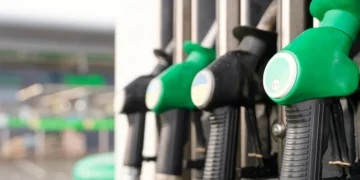



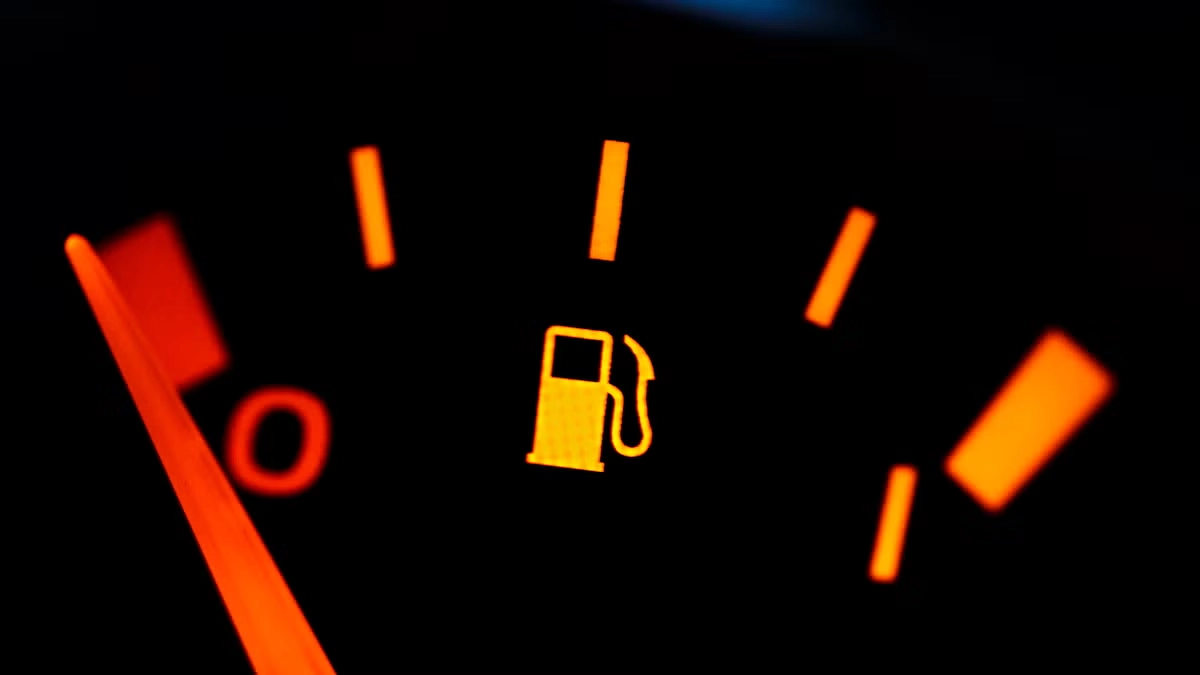
Some fuel stations in South Africa are running empty ahead of the April fuel-price change, with diesel proving the biggest pressure point. According to News24’s Monday update, 143 service stations were without diesel and 136 were without petrol across the country as a late-month buying rush overwhelmed parts of the delivery system.
The immediate issue is not that South Africa has officially run out of fuel. The Department of Mineral and Petroleum Resources and the Fuels Industry Association of South Africa said on 20 March that national supply remains stable in the immediate term and that localised logistical problems do not amount to a countrywide shortage.
What has changed is the severity of the pressure at station level. With the next price adjustment due on Wednesday, buyers have accelerated purchases, some retailers are reporting demand far above normal, and forecourts in several regions are experiencing intermittent stock-outs and delivery delays. What happens next depends on whether the buying surge eases, whether tanker logistics recover quickly enough, and whether government changes the expected April fuel-cost trajectory before the new price takes effect.
What we know so far
The clearest count now in the public domain comes from News24. Its Monday briefing said 143 stations were without diesel and 136 were without petrol across South Africa. The same briefing added that some companies were seeing demand run at three times the normal level, a sign that the market was dealing with a late-stage rush rather than a routine month-end pattern.
The official government line has not changed as fast as the queues have. In the joint statement issued on 20 March, the DMPR and FIASA said claims of a broader fuel shortage were misleading, said there was no basis for panic-buying, and stressed that any isolated shortages were operational and localised rather than national.
That distinction is supported by Reuters’ earlier reporting on the South African fuel squeeze. Reuters said the country’s recent stock-outs were being driven by a spike in purchases ahead of an expected steep April fuel-price increase, rather than by a fundamental national shortage of product. The same report quoted FIASA head Avhapfani Tshifularo as saying large users with storage capacity were placing unusually high orders, creating “artificial demand” despite normal national supply levels.
News24’s earlier reporting adds another operational reason why stations are running dry: limited road tanker availability. FIASA told News24 that above-normal service-station demand was contributing to current supply tightness and that insufficient tanker capacity was adding pressure, resulting in delivery delays and intermittent stock-outs in several regions.
That means two things can be true at once. South Africa can still have fuel in the system at national level, while a forecourt in Cape Town, Upington, Mpumalanga or elsewhere temporarily has nothing left to pump because the local demand spike outran the logistics chain.
Why it matters
The reason this matters goes far beyond motorists filling private vehicles. Diesel is central to road freight, farming, construction, backup power and export logistics. Reuters reported on Monday that the Citrus Growers’ Association of Southern Africa is already warning that isolated diesel shortages could affect the fruit export season, noting that 95% of citrus exports move by road to ports.
That turns station-level stock-outs into an economic risk. A private motorist facing an empty pump is inconvenienced. A freight operator, farmer or exporter facing the same problem may lose time, break delivery schedules or incur higher transport costs across an entire value chain. Even if the stock-outs remain temporary, the cost of disruption can travel well beyond the station forecourt.
The timing makes the situation worse. Fuel price changes in South Africa are implemented on the first Wednesday of the month, and 1 April is the next change date. At the same time, Reuters reported on Tuesday that Finance Minister Enoch Godongwana was considering lowering the fuel levy because of the Iran war’s impact on local fuel prices, with a decision expected on Tuesday. That means the market is dealing not only with scarcity fears, but with uncertainty over the final shape of the April increase.
There is also a behavioural problem. Once motorists, commercial users and farmers believe a sharp hike is imminent, buying shifts from normal consumption to pre-emptive stockpiling. Government and industry have repeatedly warned that this kind of panic-buying can create the very shortages the public fears, because it puts abnormal stress on station inventories and delivery schedules that were not built for a nationwide rush.
Key details and figures
Several details now define the current picture:
- News24 said 143 service stations had no diesel on Monday.
- The same News24 update said 136 stations were without petrol.
- Some companies told News24 that demand had jumped to roughly three times normal levels.
- FIASA told News24 that limited road tanker availability was worsening delivery delays and stock-outs.
- The DMPR and FIASA said on 20 March that national fuel supply remained stable in the immediate term.
- Reuters reported that the earlier stock-outs were caused by a pre-hike buying surge rather than a national lack of supply.
- Reuters also reported that South African citrus exporters are worried about diesel availability because road transport carries 95% of citrus exports to port.
These figures and facts show why the story should be described carefully. It is accurate to say stations are running dry. It is not yet accurate, based on the official public record, to say the national fuel system has collapsed.
What this means for households and businesses
For households, the most immediate effect is uncertainty and wasted time. Drivers may have to queue longer, search across multiple stations, or buy earlier than usual to avoid being caught out. In a month already dominated by concern over higher fuel costs, that turns a price problem into a practical access problem as well.
For businesses, the risk is more serious. Delivery fleets, agricultural users and long-haul operators cannot simply postpone demand. If diesel is rationed or unavailable at the wrong moment, the disruption moves quickly into transport schedules, production cycles and supply chains. News24 reported that some rural stations were already placing diesel sale curbs of 40 to 100 litres per customer, while Reuters said exporters were warning of knock-on effects on citrus logistics.
That is why calls are growing for some form of short-term state response. Reuters reported that Treasury was considering fuel-levy relief, while farming and business groups have already argued that the April increase should be softened or handled differently to reduce the incentive for destabilising last-minute buying.
What happens next
The next major step is the April fuel-price decision and implementation. If the expected increase remains steep, the final hours before the change could put even more strain on already pressured stations. If Treasury steps in with some levy relief, that may ease part of the rush, though it would not instantly solve the logistics backlog already visible in parts of the country.
After that, the key question will be whether normal buying patterns return. If they do, the official position that South Africa is facing local stock-outs rather than a national shortage will look more credible. If they do not, more forecourts could run empty even with fuel still available in the broader system.
For now, the strongest verified reading is this: South Africa is experiencing a sharp, widespread forecourt squeeze ahead of the April price change, with 143 stations reported dry on diesel and 136 on petrol on Monday. But the evidence in the public record still points to a logistics-and-demand crisis rather than a confirmed nationwide fuel shortfall.